As the main component of the forklift truck, the main function of the tire is to bear the weight of the walking forklift (including the weight of the cargo). By friction with the ground, the forklift truck is driven to drive and the walking forklift is turned to absorb vibration and shock, so that the forklift truck runs smoothly. Tires have an impact on the traction performance, braking performance, stability, safety and efficiency of the walking forklift.

Braking distance of forklift truck: China's walking forklift standard has corresponding regulations on the braking capacity of the forklift truck. Walking forklift runs without load, the speed is 20KM/H, the braking distance of the forklift truck is not more than 8M, the walking forklift is fully loaded, and the speed is 10KM/H. The braking distance of the forklift truck is not more than 4M.
For the impact of walking forklift dynamic performance, the dynamic performance of solid tires is not as good as pneumatic tires, especially for climbing. In addition, the traction of the rear forklift truck with a solid tire is slightly lower than that of a pneumatic tire walking forklift.
Analysis: 1, rolling resistance, the friction inside the carcass makes the tire heating is one of the reasons for the rolling resistance. The rolling resistance coefficient of the 3T forklift truck pneumatic tire is 0.012-0.013, and the solid tire is 10%-15% higher.
2, the inertia resistance of the walking forklift depends on the quality and speed of the forklift truck.
3, the ramp resistance of the walking forklift depends on the quality of the forklift truck and the slope angle.

For the impact of the brake performance of the walking forklift, under the same braking force, the brake deceleration of the large-quality forklift truck is small, so the braking distance of the walking forklift is long. Therefore, the brake performance of installing a solid tire forklift truck is slightly worse than that of a walking forklift equipped with a pneumatic tire.
For the effect of the smoothness of the forklift truck, the smoothness of the walking forklift refers to the degree of vibration generated by the forklift truck when driving on uneven roads. walking forklift trucks with surface-mounted solid tires are slightly better than those with pneumatic tires. The main reason is that the stiffness of the solid tire is smaller than that of the pneumatic tire, so the vibration damping performance is better. Conclusion: 1. Replace the pneumatic tire with a solid tire, and the power performance and braking performance of the forklift truck are slightly reduced. However, it still meets the requirements of the walking forklift standard.
2. The rolling resistance coefficient of solid tires is higher than that of pneumatic tires. For internal combustion forklift truck with sufficient power reserve, the performance has little effect.

3. Walking forklift can improve the stability of the forklift truck after installing the solid tire.
4. Walking forklift with solid tires are suitable for places with poor road conditions.
-
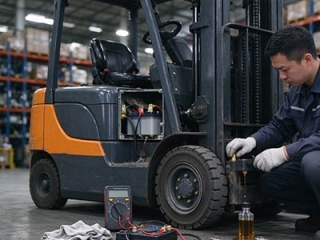 Reliability Of Newnewton Warehouse Forklifts For Heavy-Duty ShiftsWarehouse forklift reliability relies on industrial parts, reinforced frames and factory durability tests. Proper operation and maintenance reduce unexpected downtime.
Do you like ?0
Read more -
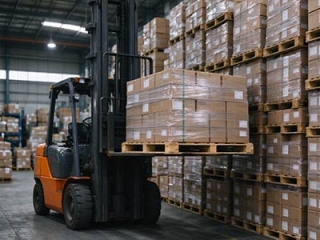 Forklift Configuration Strategy For Dense Warehousing, Warehouse ForkliftDense warehousing needs matched forklifts besides racks. Reach and trilateral stackers fit different layouts, coordinate aisle, load curve and floor for smooth handling.
Do you like ?0
Read more -
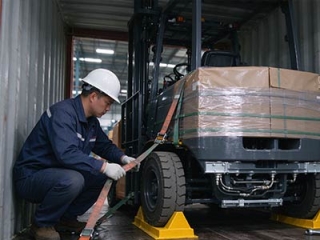 Full Container Supply For Export Forklifts, Forklift ManufacturerBulk forklift orders for overseas can ship by FCL or LCL. Newnewton FCL offers stable freight, safer packing and mixed models for large purchases.
Do you like ?0
Read more -
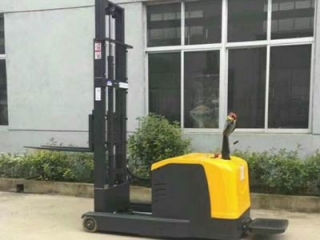 Stand-on Reach Stacker For Narrow Aisle Stacking, Mast Reach StructureStand-on reach stackers feature sliding masts that stay outside racks. They boost storage density in narrow aisles and require flat floors and standard pallets.
Do you like ?0
Read more -
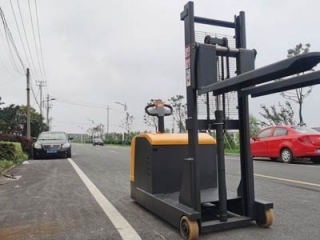 Stand-on Counterbalance Stacker For Various Pallets, Why No Leg RestrictionCounterbalance stackers have no front outriggers, using rear counterweight to avoid pallet interference. They fit various odd pallets yet need wider warehouse aisles.
Do you like ?0
Read more -
 Custom Walk-Behind Counterbalance Stacker | Non-Standard ModificationsStandard walk-behind counterbalance stackers struggle with non-standard pallets and tight aisles. Customize load, lift, forks and structure, share working conditions for safe design.
Do you like ?0
Read more