Manual Hydraulic Pallet Truck | Operation Guide for Manual Pallet Truck
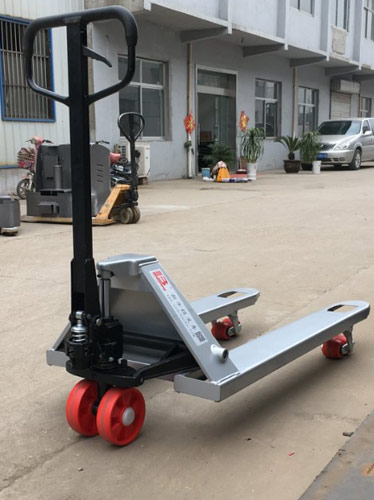
Avoid Misoperation! Correct Operation Steps and Safety Rules for manual hydraulic pallet truck Improper operation of pallet trucks may lead to personal injury and cargo damage. It reduces work efficiency and causes unnecessary losses. Therefore, mastering the manual pallet truck operation guide is essential.
Standard Operation Procedures
Pre-operation Inspection
Check wheels for tangled debris, ensure the lifting valve of handle works smoothly. Inspect the truck body for deformation and hydraulic parts for oil leakage. Do not use the truck if any fault is found.
Fork Alignment
Align the forks horizontally with pallet openings and push forward slowly. Make sure forks fully slide under the pallet, with fork tips close to pallet cross beams to prevent unilateral load stress.
Lifting Cargo
Push the handle down to hydraulic position, pump the handle repeatedly to lift forks slowly. Raise the pallet 5–10 cm off the ground; avoid excessive lifting height.
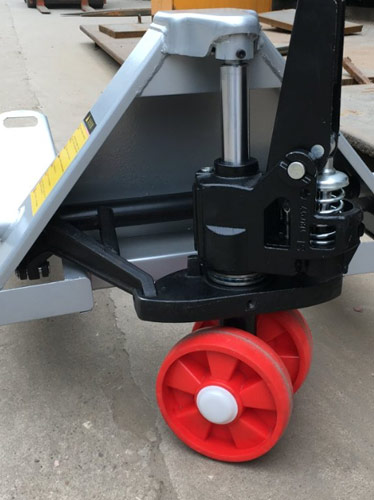
Cargo Transportation
Hold the handle and push steadily, travel straight as much as possible. Slow down before turning; sharp turns and sudden pushing are prohibited. Control speed on slopes to prevent cargo sliding forward.
Unloading & Lowering Forks
After arriving at destination, lift the handle to release pressure and lower forks smoothly. Pull out the pallet truck only after the pallet fully touches the ground.
Key Operation Tips
Place cargo centrally to keep the center of gravity between two forks. Unilateral loading is forbidden. Never overload; comply with the rated load capacity of the pallet truck. Drive slowly on uneven ground or pits to avoid impact damage to wheel assemblies. Do not drag violently over long distances to reduce wear of hydraulic system.
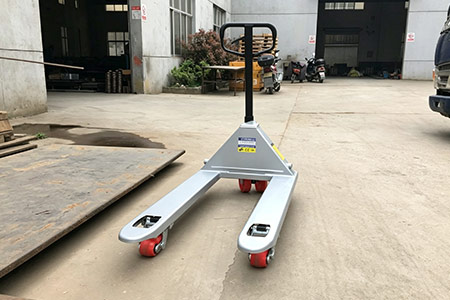
Critical Safety Regulations (Violation Strictly Prohibited)
Carrying passengers or sliding while standing on the pallet truck is forbidden. Do not drop pallets onto forks from height; impact will damage hydraulic cylinders. Avoid horizontal turning on slopes to prevent cargo tipping. Do not park loaded pallet trucks on inclined ground for a long time. Never leave forks raised during long-time parking, to avoid cargo falling caused by hydraulic pressure loss. Slow down and warn pedestrians when visibility in aisles is poor. Do not ram racks, walls or other equipment with the pallet truck.
Mastering the above three parts helps you skillfully operate manual hydraulic pallet truck. It ensures safer daily work, lowers accident risks and improves handling efficiency. Feel free to contact us if you have further questions.
-
 Reliability Of Newnewton Warehouse Forklifts For Heavy-Duty ShiftsWarehouse forklift reliability relies on industrial parts, reinforced frames and factory durability tests. Proper operation and maintenance reduce unexpected downtime.
Do you like ?0
Read more -
 Forklift Configuration Strategy For Dense Warehousing, Warehouse ForkliftDense warehousing needs matched forklifts besides racks. Reach and trilateral stackers fit different layouts, coordinate aisle, load curve and floor for smooth handling.
Do you like ?0
Read more -
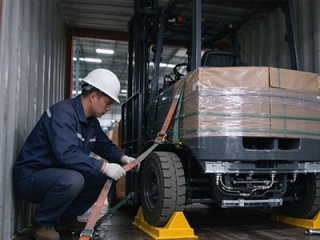 Full Container Supply For Export Forklifts, Forklift ManufacturerBulk forklift orders for overseas can ship by FCL or LCL. Newnewton FCL offers stable freight, safer packing and mixed models for large purchases.
Do you like ?0
Read more -
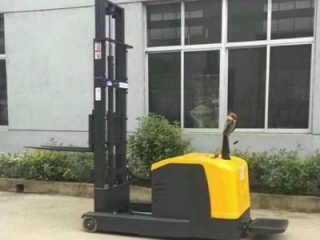 Stand-on Reach Stacker For Narrow Aisle Stacking, Mast Reach StructureStand-on reach stackers feature sliding masts that stay outside racks. They boost storage density in narrow aisles and require flat floors and standard pallets.
Do you like ?0
Read more -
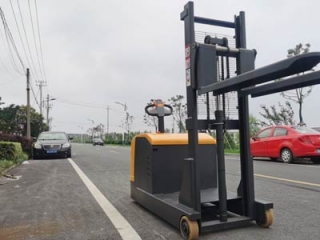 Stand-on Counterbalance Stacker For Various Pallets, Why No Leg RestrictionCounterbalance stackers have no front outriggers, using rear counterweight to avoid pallet interference. They fit various odd pallets yet need wider warehouse aisles.
Do you like ?0
Read more -
 Custom Walk-Behind Counterbalance Stacker | Non-Standard ModificationsStandard walk-behind counterbalance stackers struggle with non-standard pallets and tight aisles. Customize load, lift, forks and structure, share working conditions for safe design.
Do you like ?0
Read more