
Walk-Behind Counterbalance Stacker | Electric Counterbalance Stacker
Preferred Working Scenarios for walk-behind counterbalance stacker What working conditions suit the walk-behind counterbalance stacker? To find out, you need to learn its core features first. Unlike standard stackers, it has no front support legs. The rear counterweight ensures vehicle stability. This design is not limited by pallet bottom clearance. With a compact frame, it can operate in narrow aisles.
Applicable scenarios are listed below:
Material Handling on Production Lines
Many workshops adopt single-sided pallets or closed-bottom tooling pallets. Standard leg-type stackers cannot insert legs under such pallets for loading. The counterbalance stacker features no front legs and directly handles single-sided pallets. It is ideal for raw material delivery, finished goods transfer and semi-finished product stacking. Workshops usually have narrow aisles and densely arranged equipment. This model has a small turning radius. Operators walk behind to control it, moving flexibly between assembly lines for daily material circulation. Recommended configuration: 1–1.5 ton capacity, lifting height 2–3.5 meters. Lithium battery version is preferred for long continuous shifts.
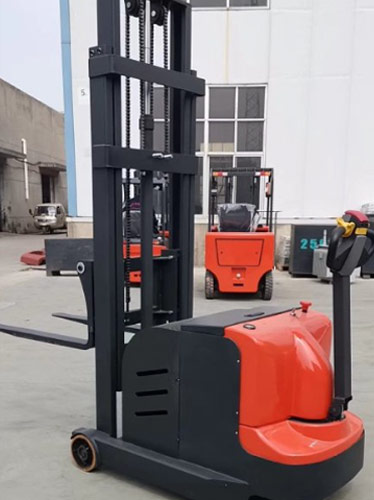
Cargo Stacking in Regular Warehouses
Small and medium raw material warehouses, hardware storage rooms and e-commerce backup warehouses widely use single-sided and non-standard special pallets. Leg-type stackers require minimum ground clearance under pallets and fail to work if pallets sit too low. The counterbalance stacker has no such restriction and supports stacking and rack storage. It fits medium-volume warehouses that cannot afford large forklifts, covering ground transportation and low-level rack stacking. Note: For high racks and dense narrow-aisle storage, compare reach stackers first. For stacking below 4 meters, the walk-behind counterbalance model delivers better cost performance.
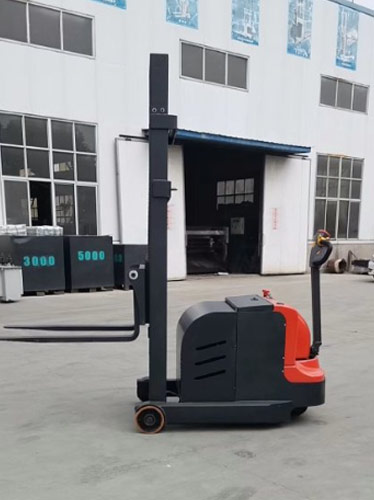
Truck Loading & Short-Distance Transfer
Urban distribution and trading companies often load and unload goods inside box trucks. Large forklifts cannot enter compact truck cabins. The compact counterbalance stacker can drive into truck compartments to handle single-sided pallets without loading docks. It is suitable for frequent short-distance loading and multi-stop delivery. It solves the drawbacks of labor-intensive manual stackers and leg-type electric stackers incompatible with single-sided pallets.
In conclusion, electric counterbalance stacker boasts obvious advantages and fits a wide range of working conditions to meet special operation demands. Contact us to get free electronic brochures with detailed specifications if you have purchasing plans.
-
 Reliability Of Newnewton Warehouse Forklifts For Heavy-Duty ShiftsWarehouse forklift reliability relies on industrial parts, reinforced frames and factory durability tests. Proper operation and maintenance reduce unexpected downtime.
Do you like ?0
Read more -
 Forklift Configuration Strategy For Dense Warehousing, Warehouse ForkliftDense warehousing needs matched forklifts besides racks. Reach and trilateral stackers fit different layouts, coordinate aisle, load curve and floor for smooth handling.
Do you like ?0
Read more -
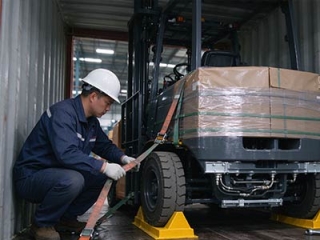 Full Container Supply For Export Forklifts, Forklift ManufacturerBulk forklift orders for overseas can ship by FCL or LCL. Newnewton FCL offers stable freight, safer packing and mixed models for large purchases.
Do you like ?0
Read more -
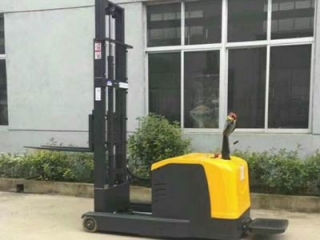 Stand-on Reach Stacker For Narrow Aisle Stacking, Mast Reach StructureStand-on reach stackers feature sliding masts that stay outside racks. They boost storage density in narrow aisles and require flat floors and standard pallets.
Do you like ?0
Read more -
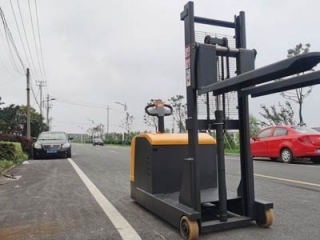 Stand-on Counterbalance Stacker For Various Pallets, Why No Leg RestrictionCounterbalance stackers have no front outriggers, using rear counterweight to avoid pallet interference. They fit various odd pallets yet need wider warehouse aisles.
Do you like ?0
Read more -
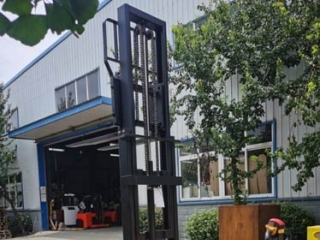 Custom Walk-Behind Counterbalance Stacker | Non-Standard ModificationsStandard walk-behind counterbalance stackers struggle with non-standard pallets and tight aisles. Customize load, lift, forks and structure, share working conditions for safe design.
Do you like ?0
Read more








