
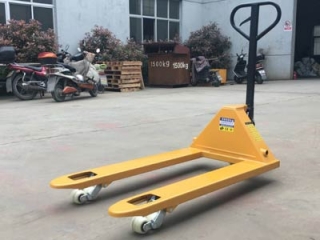
Small manual pallet jack is widely used in medium and small warehouses. Improper tonnage selection will shorten service life and bring tipping risks. Many buyers only calculate cargo weight without reserved safety margin. Here are practical tips on how to choose load capacity of manual hydraulic pallet truck.
First, calculate total load including pallets and packing materials, not just net cargo weight. For example, if goods weigh 1.8 tons and pallets plus accessories weigh 200kg, the total weight reaches 2 tons. A 1.5-ton pallet truck cannot be used for this load. Long-term overload causes cylinder leakage, frame deformation and fast wheel wear.
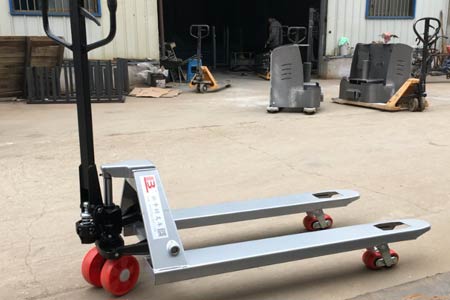
Second, reserve proper safety margin. It is recommended that actual load stays within 80% of rated capacity for regular use. Increase the margin further for frequent operation, long working hours, uneven ground or ramp handling, since extra resistance raises the real load.
Third, select mainstream tonnage based on working scenarios. 1 ton and 1.5 ton small models are lightweight and easy to push, ideal for cartons, small materials and compact pallets in shops and small storage rooms. The 2-ton model is the most common type with sufficient spare parts for most standard warehouses. 2.5 ton and 3 ton versions have thicker frames for heavy factory goods, yet require more pushing force.
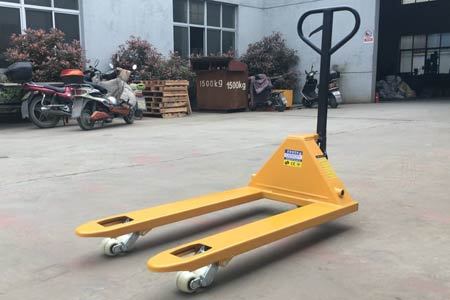
Fourth, take special working conditions into account. Rough, potholed floors and frequent ramp climbing increase load stress, so choose one higher tonnage level under the same cargo weight.
Fifth, check fork dimensions. Higher capacity models adopt stronger fork structures. Fork length and width should match your pallets to prevent risks from offset center of gravity.
If you still have confusion on tonnage matching for small manual pallet jack, share your cargo weight, pallet size and site conditions to get suitable model recommendation. Feel free to contact us.
-
 Maintenance Notes for Double Pallet Truck Under Heavy Warehouse LoadsOperators often ignore abnormal motor noise of double pallet trucks during rush orders. Continuous operation burns motors. Timely maintenance prevents failures.
Do you like ?0
Read more -
 How to Get Accurate Quotations for Stand-on Counterbalance StackerStand-on counterbalance stackers rely on rear weight for stability and cost more. Battery, load, lift height and custom options affect final quotations.
Do you like ?0
Read more -
 Manual Stacker Vs Pallet Jack: Key Operational Function DifferencesNew buyers confuse manual pallet trucks and manual stackers. They differ in lifting function. Pallet trucks for transfer, stackers for racking to avoid risks.
Do you like ?0
Read more -
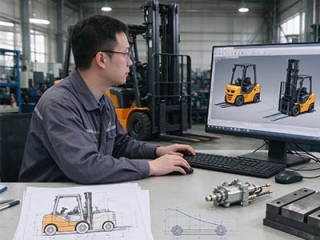 Custom Forklift Dimensions for Export to Fit Narrow Warehouse AislesForklift export faces size risks. Overseas orders may fail door, container or aisle fit. Customization needs balance of gravity, load and target market certifications.
Do you like ?0
Read more -
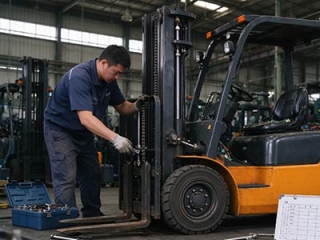 Forklift Safety Management Guide Based on Special Equipment SpecificationsForklifts are special equipment. Follow TSG 81 with training, records, inspection and on-site control to prevent accidents and penalties.
Do you like ?0
Read more -
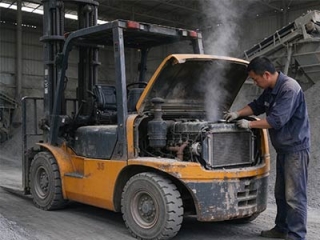 Heavy-Duty Diesel Forklift High Temperature Troubleshooting Guide3.5t diesel forklifts often overheat when handling sand and stone. Inspect cooling system step by step: radiator, belt, shroud, thermostat and water pump.
Do you like ?0
Read more








