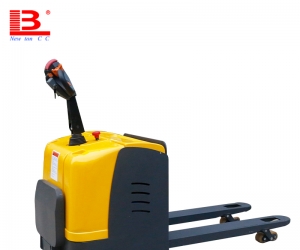
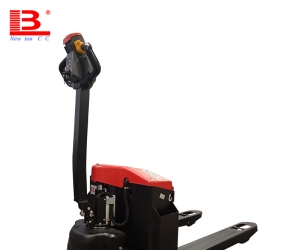
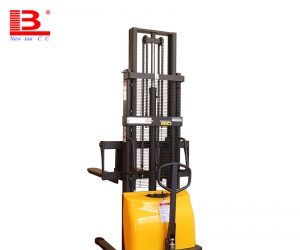
Many buyers only refer to static cargo weight during equipment procurement and ignore load attenuation at high lifting heights. If you are wondering about load selection tips for manual hydraulic stacker, these professional rules can help you avoid fork bending and oil cylinder leakage. Proper manual hydraulic stack truck selection ensures long-term stable warehouse stacking operation.
Reserve sufficient safety load margin Do not select equipment strictly according to the total cargo weight. If your cargo plus pallet weighs 0.8 tons, do not choose a 0.8-ton stacker directly. A 1-ton model is recommended. Unbalanced load and instantaneous impact often occur in warehouse work. Safety margins effectively protect the frame and hydraulic components and reduce deformation risks.
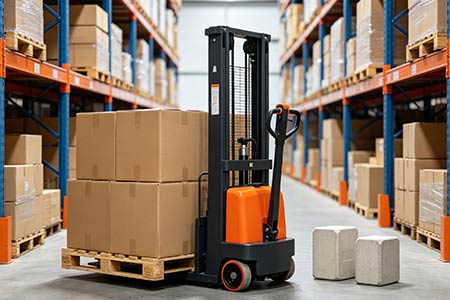
Pay attention to load attenuation at high lifting height The rated load of a manual hydraulic stacker is calibrated at low lifting height. When forks rise to the maximum height, the actual bearing capacity decreases obviously. For frequent high-level stacking, select models according to the actual high-position load instead of low-position rated parameters.
Consider cargo center of gravity and unbalanced load Cargo gravity position affects stacking stability greatly. High center of gravity or offset placement leads to difficult lifting and rollover risks. Place goods in the center of forks. Choose higher load capacity for long materials and eccentric cargo during manual hydraulic stack truck selection.
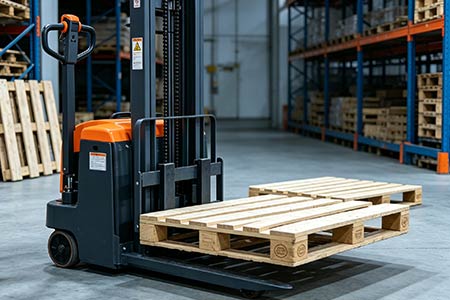
Match fork size with pallet dimension Pallet width and length must match the fork range. Excessively extended forks reduce actual bearing capacity. Verify the fork adjustment scope before purchase to avoid abnormal stress and decreased safety load caused by mismatched pallets.
Mastering these load selection tips for manual hydraulic stacker helps you select cost-effective and suitable equipment for daily warehouse handling. Reasonable manual hydraulic stack truck selection avoids early equipment failure and improves overall warehouse operation safety.
-
 Reliability Of Newnewton Warehouse Forklifts For Heavy-Duty ShiftsWarehouse forklift reliability relies on industrial parts, reinforced frames and factory durability tests. Proper operation and maintenance reduce unexpected downtime.
Do you like ?0
Read more -
 Forklift Configuration Strategy For Dense Warehousing, Warehouse ForkliftDense warehousing needs matched forklifts besides racks. Reach and trilateral stackers fit different layouts, coordinate aisle, load curve and floor for smooth handling.
Do you like ?0
Read more -
 Full Container Supply For Export Forklifts, Forklift ManufacturerBulk forklift orders for overseas can ship by FCL or LCL. Newnewton FCL offers stable freight, safer packing and mixed models for large purchases.
Do you like ?0
Read more -
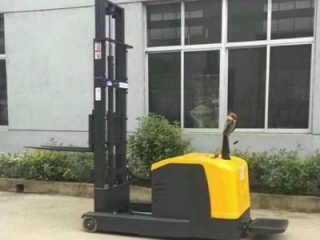 Stand-on Reach Stacker For Narrow Aisle Stacking, Mast Reach StructureStand-on reach stackers feature sliding masts that stay outside racks. They boost storage density in narrow aisles and require flat floors and standard pallets.
Do you like ?0
Read more -
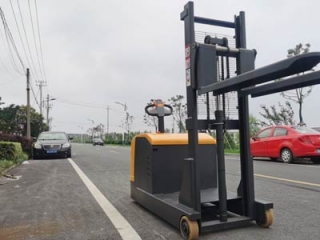 Stand-on Counterbalance Stacker For Various Pallets, Why No Leg RestrictionCounterbalance stackers have no front outriggers, using rear counterweight to avoid pallet interference. They fit various odd pallets yet need wider warehouse aisles.
Do you like ?0
Read more -
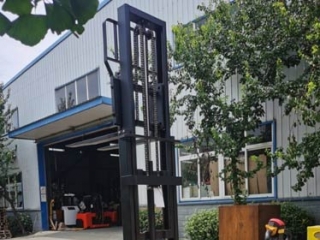 Custom Walk-Behind Counterbalance Stacker | Non-Standard ModificationsStandard walk-behind counterbalance stackers struggle with non-standard pallets and tight aisles. Customize load, lift, forks and structure, share working conditions for safe design.
Do you like ?0
Read more