
Walk-behind Counterbalance Stacker Wholesale Cost & Warehouse Buying Guide
The wholesale price of walk-behind counterbalance stacker varies greatly. Many warehouse buyers wonder what causes such price differences for walk-behind counterbalance stacker. The price is closely related to material selection, battery capacity, after-sales service and other factors. Buying equipment in bulk can get preferential packages. Warehouse procurement of walk-behind counterbalance stacker requires sufficient research in advance so you can select suitable forklifts from the perspective of total cost.
Load capacity and lifting height are key factors affecting the base price. The 1-ton model with a 2.5 to 3-meter mast has a lower factory price for basic lead-acid versions. The 1.5-ton model is widely used in warehouses, with a lifting height of 3 to 3.5 meters. Thicker mast materials push up the overall machine cost. For 2-ton and higher load capacity or lifting heights over 3.5 meters requiring triple masts, reinforced steel, cylinders and chains will be adopted, leading to a notable price increase.
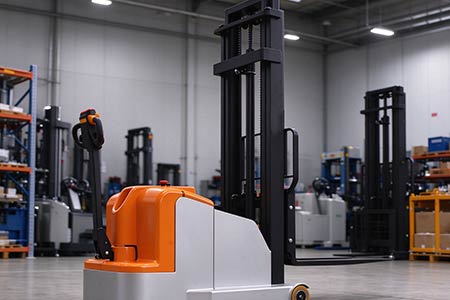
Price gaps caused by different battery types cannot be ignored. Models equipped with lead-acid batteries feature lower upfront investment, suitable for warehouses with short daily working hours and require regular water maintenance. Lithium battery versions are maintenance-free and support fast charging with longer cycle life, ideal for multi-shift continuous operation scenarios, though they cost more than lead-acid configurations under the same specifications.
Drive controllers, fork attachments and customized requirements also change the final wholesale price. Machines with ordinary brushed motors and basic controllers cost less. Models with brushless AC drive and imported controllers have lower failure rates and reduce long-term maintenance costs. Additional charges apply for custom options including fork side shift, non-standard fork length, special painting and cold storage modification. The purchasing quantity affects the wholesale discount offered by manufacturers. Larger order volume brings more competitive unit price.
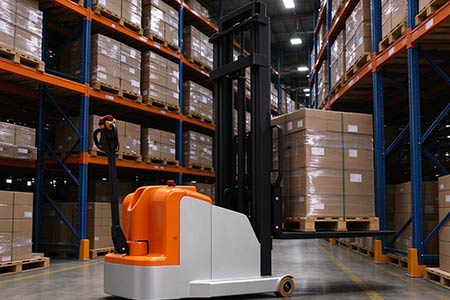
Warranty period, spare parts supply, on-site technical guidance and other supporting services also exert influences. Quotations from dealers are generally higher than direct supply from source manufacturers. Bulk procurement by directly contacting factories helps cut intermediate links. When submitting inquiry information, prepare rated load capacity, maximum lifting height, daily working hours, pallet specifications and site working conditions in advance. Manufacturers can provide accurate quotations and selection solutions.
Warehouse procurement of walk-behind counterbalance stacker needs careful consideration. Feel free to consult for detailed pricing and equipment solutions.
-
 Reliability Of Newnewton Warehouse Forklifts For Heavy-Duty ShiftsWarehouse forklift reliability relies on industrial parts, reinforced frames and factory durability tests. Proper operation and maintenance reduce unexpected downtime.
Do you like ?0
Read more -
 Forklift Configuration Strategy For Dense Warehousing, Warehouse ForkliftDense warehousing needs matched forklifts besides racks. Reach and trilateral stackers fit different layouts, coordinate aisle, load curve and floor for smooth handling.
Do you like ?0
Read more -
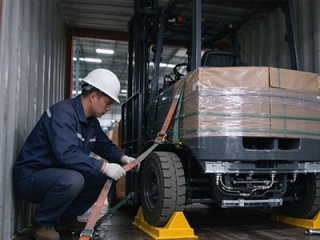 Full Container Supply For Export Forklifts, Forklift ManufacturerBulk forklift orders for overseas can ship by FCL or LCL. Newnewton FCL offers stable freight, safer packing and mixed models for large purchases.
Do you like ?0
Read more -
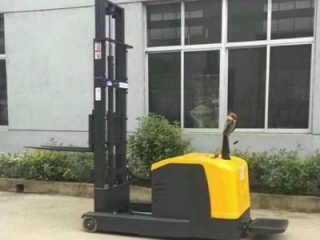 Stand-on Reach Stacker For Narrow Aisle Stacking, Mast Reach StructureStand-on reach stackers feature sliding masts that stay outside racks. They boost storage density in narrow aisles and require flat floors and standard pallets.
Do you like ?0
Read more -
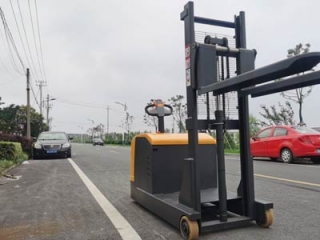 Stand-on Counterbalance Stacker For Various Pallets, Why No Leg RestrictionCounterbalance stackers have no front outriggers, using rear counterweight to avoid pallet interference. They fit various odd pallets yet need wider warehouse aisles.
Do you like ?0
Read more -
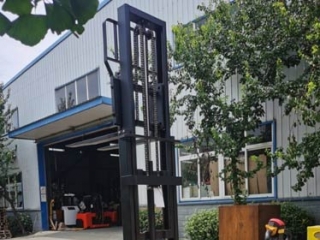 Custom Walk-Behind Counterbalance Stacker | Non-Standard ModificationsStandard walk-behind counterbalance stackers struggle with non-standard pallets and tight aisles. Customize load, lift, forks and structure, share working conditions for safe design.
Do you like ?0
Read more








