Choose Narrow or Wide Leg Stacker? Pallet & Aisle Matching Guide
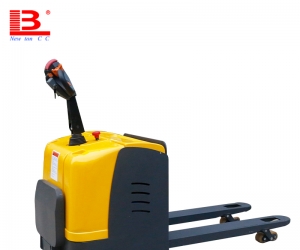
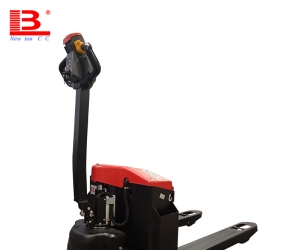
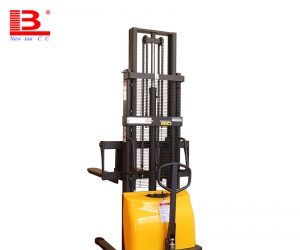
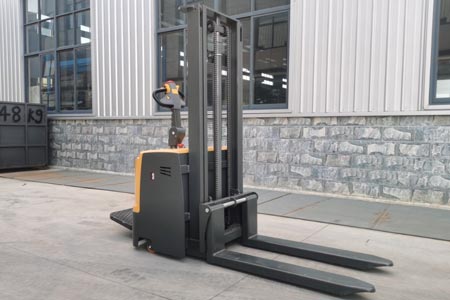
Stand-on stackers serve as mainstream equipment for warehouse transportation and stacking. They are divided into two types: wide leg and narrow leg stackers. The application scenarios of narrow leg & wide leg stacker vary greatly, determined by warehouse aisle width, pallet dimensions and other conditions. This article elaborates on structural differences between the two versions of stand-on full electric stacker.
Basic Core Structural Differences
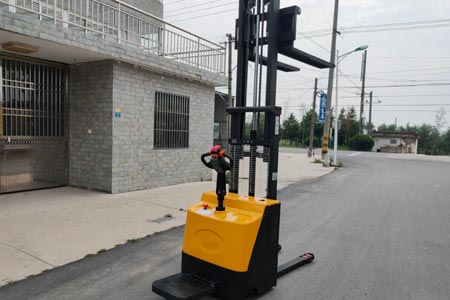
Narrow Leg Stand-on Stacker
Standard outer width of straddle legs in the industry: 550mm Compact straddle leg spacing reduces overall horizontal vehicle dimension with integrally welded frame. Structural features: Smaller straddle span enables shorter turning radius and superior traveling flexibility. Limitations: Narrow force-bearing range of straddle legs leads to relatively obvious load capacity attenuation under high lifting conditions.
Wide Leg Stand-on Stacker
Standard outer width of wide straddle legs in the industry: 680mm Extended straddle design increases horizontal distance between two legs and widens chassis support span. Structural features: Larger supporting base improves overall vehicle stability and reduces shaking during high-level stacking. Limitations: Wider body requires slightly larger working aisle compared with narrow leg models.
Pallet Compatibility
Narrow Leg Stacker (550mm leg width)
Fit for Euro pallets 1200×800mm and most small 9-foot plastic pallets. Suitable for hollow base pallets allowing straddle legs to go underneath. Not compatible with domestic 680mm outer width cross-bottom pallets, as legs cannot insert under pallets.
Wide Leg Stacker (680mm leg width)
Fit for standard domestic 1200×1000 cross-bottom pallets and common steel or plastic pallets, the most widely used specification in domestic warehouses. Most standard pallets adopted by domestic manufacturing and logistics warehouses match 680mm wide leg stackers.
Extra reminder: 9-foot pallets are generally compatible with both models. Straddle stackers cannot work with solid bottom closed pallets.
-
 Reliability Of Newnewton Warehouse Forklifts For Heavy-Duty ShiftsWarehouse forklift reliability relies on industrial parts, reinforced frames and factory durability tests. Proper operation and maintenance reduce unexpected downtime.
Do you like ?0
Read more -
 Forklift Configuration Strategy For Dense Warehousing, Warehouse ForkliftDense warehousing needs matched forklifts besides racks. Reach and trilateral stackers fit different layouts, coordinate aisle, load curve and floor for smooth handling.
Do you like ?0
Read more -
 Full Container Supply For Export Forklifts, Forklift ManufacturerBulk forklift orders for overseas can ship by FCL or LCL. Newnewton FCL offers stable freight, safer packing and mixed models for large purchases.
Do you like ?0
Read more -
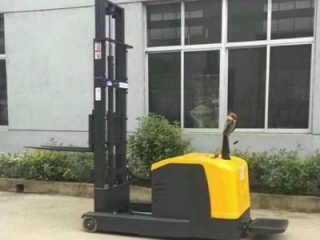 Stand-on Reach Stacker For Narrow Aisle Stacking, Mast Reach StructureStand-on reach stackers feature sliding masts that stay outside racks. They boost storage density in narrow aisles and require flat floors and standard pallets.
Do you like ?0
Read more -
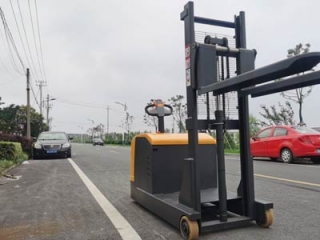 Stand-on Counterbalance Stacker For Various Pallets, Why No Leg RestrictionCounterbalance stackers have no front outriggers, using rear counterweight to avoid pallet interference. They fit various odd pallets yet need wider warehouse aisles.
Do you like ?0
Read more -
 Custom Walk-Behind Counterbalance Stacker | Non-Standard ModificationsStandard walk-behind counterbalance stackers struggle with non-standard pallets and tight aisles. Customize load, lift, forks and structure, share working conditions for safe design.
Do you like ?0
Read more