
Electric Pallet Truck Buyer Guide
In the fast-paced era of logistics, it is essential to have an efficient electric pallet truck. But in the face of a dazzling array of products on the market, how can you choose the one that suits your needs? This comprehensive guide to buying an electric pallet truck will provide you with expert advice to help you make your decision.
1. Precise positioning of handling needs
Choosing the right electric pallet truck needs to comprehensively consider multiple factors such as your own needs, working environment, product performance, brand quality and budget cost, in order to find the best solution and help the enterprise develop efficiently!
Be budget-conscious: Choose the model that fits your needs within your budget, but don't sacrifice key features for the lower price.
Consider long-term costs: In addition to the purchase price, consider the ongoing maintenance, upkeep, and battery replacement costs.
Brand reputation: Choosing an electric pallet truck from a well-known brand means more reliable quality and after-sales guarantee.
Quality certification: pay attention to whether the product has passed ISO 9001 and other relevant quality certifications.
After-sales service: High-quality after-sales service can effectively reduce the impact of equipment failure.
Battery life: Choose the right battery capacity based on the operating time and intensity, and pay attention to the charging time and fast charging function.
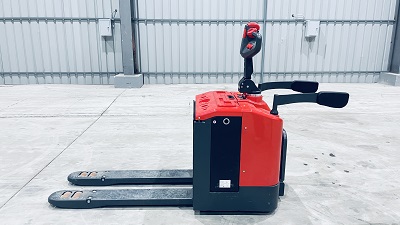
Speed: Choose a safe and reasonable driving speed and lifting speed according to the working scene.
Climbing ability: Places with slopes need to choose a truck with sufficient climbing ability.
Ground conditions determine passability: rough terrain requires a carrier with good shock absorption and off-road ability, while smooth ground requires less tire grip.
Space constraints require flexibility: narrow aisles require a compact truck with a small turning radius, while a wide range of options is available in spacious environments.
Ambient temperature affects performance: High or low temperature environments require the selection of batteries and electrical systems with corresponding temperature resistance.
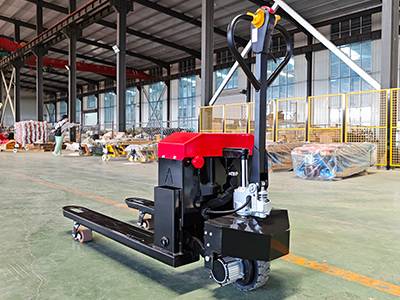
The characteristics of the cargo determine the direction of choice: the weight of the cargo is the primary consideration, with heavy cargo requiring a more load-bearing vehicle, while light cargo can choose a flexible and lightweight model. The size and shape of the goods are also crucial, for example, long strips of goods require longer forks, and irregular goods require special customization.
Handling frequency affects performance choices: high-frequency handling requires a durable and long-lasting truck, while low-frequency handling can choose a more cost-effective product.
-
 Reliability Of Newnewton Warehouse Forklifts For Heavy-Duty ShiftsWarehouse forklift reliability relies on industrial parts, reinforced frames and factory durability tests. Proper operation and maintenance reduce unexpected downtime.
Do you like ?0
Read more -
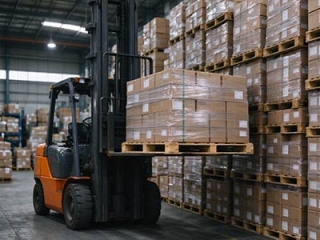 Forklift Configuration Strategy For Dense Warehousing, Warehouse ForkliftDense warehousing needs matched forklifts besides racks. Reach and trilateral stackers fit different layouts, coordinate aisle, load curve and floor for smooth handling.
Do you like ?0
Read more -
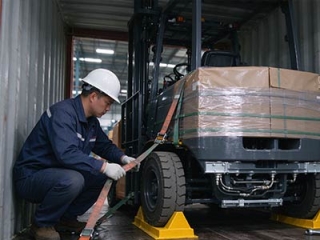 Full Container Supply For Export Forklifts, Forklift ManufacturerBulk forklift orders for overseas can ship by FCL or LCL. Newnewton FCL offers stable freight, safer packing and mixed models for large purchases.
Do you like ?0
Read more -
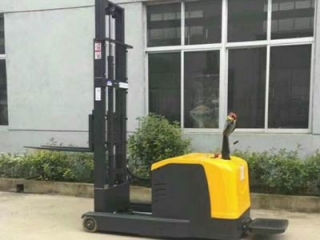 Stand-on Reach Stacker For Narrow Aisle Stacking, Mast Reach StructureStand-on reach stackers feature sliding masts that stay outside racks. They boost storage density in narrow aisles and require flat floors and standard pallets.
Do you like ?0
Read more -
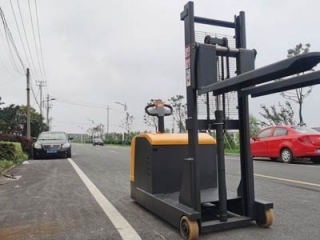 Stand-on Counterbalance Stacker For Various Pallets, Why No Leg RestrictionCounterbalance stackers have no front outriggers, using rear counterweight to avoid pallet interference. They fit various odd pallets yet need wider warehouse aisles.
Do you like ?0
Read more -
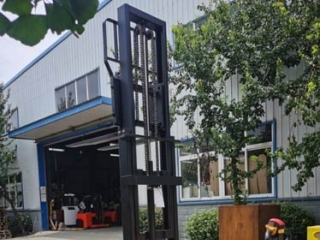 Custom Walk-Behind Counterbalance Stacker | Non-Standard ModificationsStandard walk-behind counterbalance stackers struggle with non-standard pallets and tight aisles. Customize load, lift, forks and structure, share working conditions for safe design.
Do you like ?0
Read more








