4 Core Load Control Tips for Off-road Electric Pallet Jack Safety
Outdoor yards and construction sites with unpaved, uneven ground are completely different from flat indoor warehouse environments. Ordinary electric pallet trucks cannot adapt to harsh outdoor conditions, while the off-road electric walk-behind pallet truck is professionally designed for bumpy and rugged terrain. However, improper load control will still lead to chassis damage, cargo tilting and potential safety accidents. Follow these four load control standards to ensure stable and safe outdoor operation.
First, strictly abide by the rated load standard and never overload for a long time. The rated load marked on the equipment nameplate is tested based on flat and hard ground conditions. When working on gravel ground, soil roads and slopes, the equipment bears extra impact force. It is necessary to reserve a certain load margin instead of running full load, so as to avoid equipment loss and safety risks.
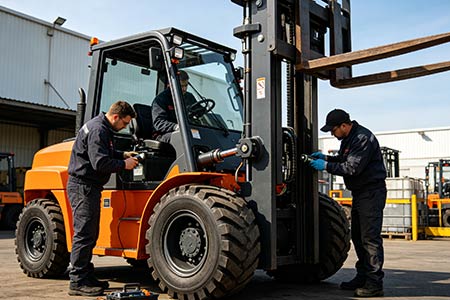
Overloading will accelerate the aging and wear of the frame, wheel axle and hydraulic components. When passing through potholed road sections, the cargo center of gravity is prone to deviation, which significantly increases the risk of vehicle side tipping and cargo falling.
Second, standardize cargo placement and stabilize the center of gravity. Goods shall be placed in the middle of the forks evenly without unilateral partial load or overhanging the fork edges. Due to the undulating outdoor ground, unstable goods are easy to slip when passing through bumpy sections. Keep stacked goods at a low height to reduce shaking caused by terrain bumps. Fasten pallets tightly before transportation to prevent scattered cargo during handling.
Third, dynamically adjust the load according to actual road conditions. Slope operation is a key easily ignored point. Reduce load weight and drive at a low speed when going uphill and downhill. During downhill transportation, keep the cargo on the uphill side to avoid forward tipping. When encountering deep pits and dense gravel sections, properly reduce the load if necessary. Forced heavy-load passage will cause serious damage to the drive wheels and chassis structure of the off-road electric walk-behind pallet truck.
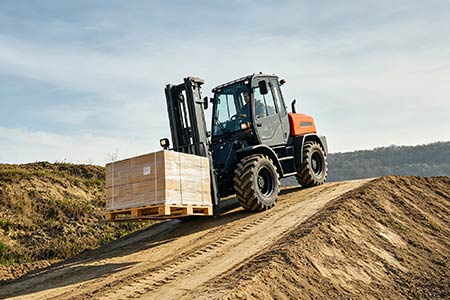
Fourth, complete equipment inspection before and after heavy-load operation. Check key parts such as tires for damage, confirm no hydraulic pressure relief, and ensure all connecting fasteners are tight. Do not park the vehicle immediately after heavy-duty work. Observe the equipment status carefully. Stop operation and troubleshoot in time if there is slow fork sinking, abnormal noise or other faults.
In conclusion, outdoor off-road electric pallet truck load precautions focus on rated load compliance, standard cargo placement and adaptive operation according to site terrain. It is not allowed to copy indoor warehouse operation habits to outdoor complex working conditions. If you have purchasing demands for outdoor handling equipment, you can provide your site conditions and cargo weight to obtain professional model selection solutions.
-
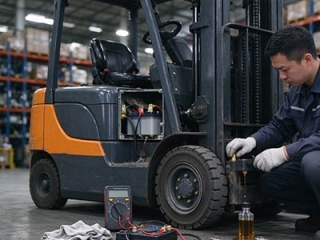 Reliability Of Newnewton Warehouse Forklifts For Heavy-Duty ShiftsWarehouse forklift reliability relies on industrial parts, reinforced frames and factory durability tests. Proper operation and maintenance reduce unexpected downtime.
Do you like ?0
Read more -
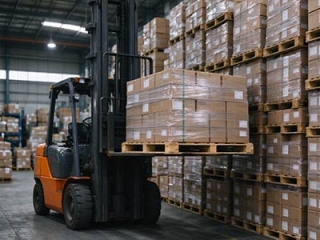 Forklift Configuration Strategy For Dense Warehousing, Warehouse ForkliftDense warehousing needs matched forklifts besides racks. Reach and trilateral stackers fit different layouts, coordinate aisle, load curve and floor for smooth handling.
Do you like ?0
Read more -
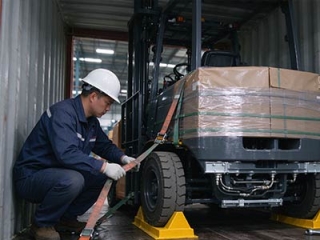 Full Container Supply For Export Forklifts, Forklift ManufacturerBulk forklift orders for overseas can ship by FCL or LCL. Newnewton FCL offers stable freight, safer packing and mixed models for large purchases.
Do you like ?0
Read more -
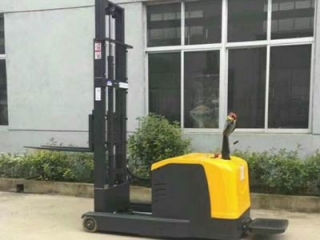 Stand-on Reach Stacker For Narrow Aisle Stacking, Mast Reach StructureStand-on reach stackers feature sliding masts that stay outside racks. They boost storage density in narrow aisles and require flat floors and standard pallets.
Do you like ?0
Read more -
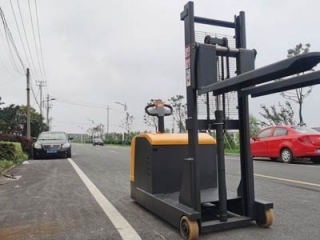 Stand-on Counterbalance Stacker For Various Pallets, Why No Leg RestrictionCounterbalance stackers have no front outriggers, using rear counterweight to avoid pallet interference. They fit various odd pallets yet need wider warehouse aisles.
Do you like ?0
Read more -
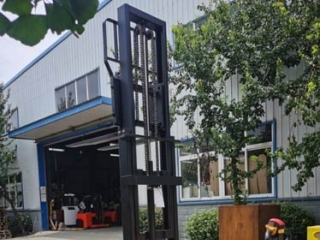 Custom Walk-Behind Counterbalance Stacker | Non-Standard ModificationsStandard walk-behind counterbalance stackers struggle with non-standard pallets and tight aisles. Customize load, lift, forks and structure, share working conditions for safe design.
Do you like ?0
Read more