
Differences Between Electric Double Pallet Jack | Standard Electric Pallet Jack
Warehouse operators often hesitate between electric double pallet jack and ordinary electric pallet jack when purchasing material handling equipment. Both machines are designed for pallet transportation, but they differ greatly in handling capacity, applicable scenarios and operating costs. Choosing the proper model according to warehouse turnover demands can improve handling efficiency. Here are the key comparison points for quick reference.
Load capacity The ordinary electric pallet jack can carry one pallet per trip, which suits small-batch and intermittent cargo transportation. The electric double pallet truck can carry two pallets at the same time and finish two handling tasks in one run. It greatly increases the handling volume per unit time for mass continuous inbound and outbound operations. However, the double pallet model has a longer body, requiring wider warehouse aisles, and its flexibility will decrease in narrow spaces.
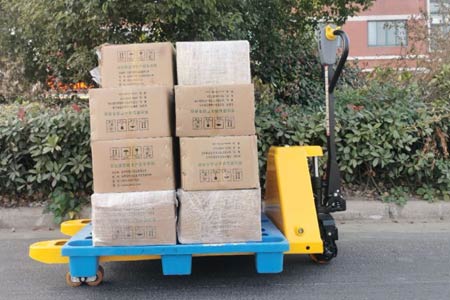
Load specification The ordinary electric pallet jack comes with fixed fork size for single standard pallet. It features light weight and easy steering, ideal for narrow aisles and workshops with small single shipment volume. The electric double pallet truck adopts double fork sets. Its chassis is reinforced to balance stress from two pallets. It works better for neatly stacked standard pallets and has higher requirements for tidy cargo stacking.
Energy consumption and cost Ordinary electric pallet jack has low energy consumption with smaller battery capacity. It owns lower purchasing and maintenance cost, fit for low-frequency operation in small and medium warehouses. The electric double pallet truck bears heavier load per trip, leading to relatively faster battery wear and higher procurement price. It is more suitable for high-turnover sites such as large warehouses and logistics sorting centers.
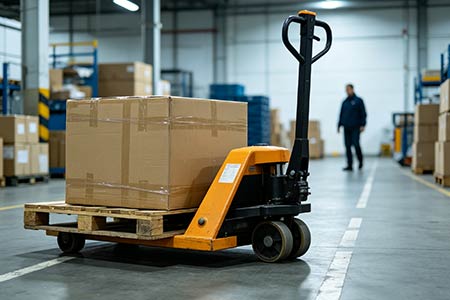
Now you know the differences between electric double pallet truck and ordinary electric pallet jack. During equipment selection, you need to comprehensively consider aisle width, daily pallet volume and cargo stacking method. If your warehouse has large cargo throughput and enough aisle space to cut handling shifts, please contact us to get model parameters and customized selection solutions.
-
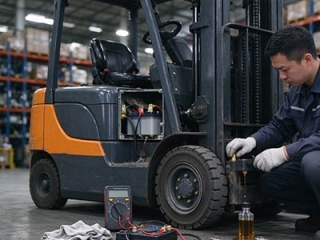 Reliability Of Newnewton Warehouse Forklifts For Heavy-Duty ShiftsWarehouse forklift reliability relies on industrial parts, reinforced frames and factory durability tests. Proper operation and maintenance reduce unexpected downtime.
Do you like ?0
Read more -
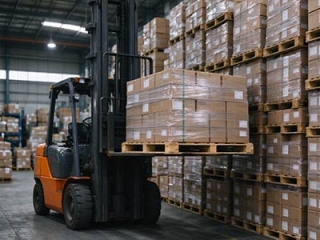 Forklift Configuration Strategy For Dense Warehousing, Warehouse ForkliftDense warehousing needs matched forklifts besides racks. Reach and trilateral stackers fit different layouts, coordinate aisle, load curve and floor for smooth handling.
Do you like ?0
Read more -
 Full Container Supply For Export Forklifts, Forklift ManufacturerBulk forklift orders for overseas can ship by FCL or LCL. Newnewton FCL offers stable freight, safer packing and mixed models for large purchases.
Do you like ?0
Read more -
 Stand-on Reach Stacker For Narrow Aisle Stacking, Mast Reach StructureStand-on reach stackers feature sliding masts that stay outside racks. They boost storage density in narrow aisles and require flat floors and standard pallets.
Do you like ?0
Read more -
 Stand-on Counterbalance Stacker For Various Pallets, Why No Leg RestrictionCounterbalance stackers have no front outriggers, using rear counterweight to avoid pallet interference. They fit various odd pallets yet need wider warehouse aisles.
Do you like ?0
Read more -
 Custom Walk-Behind Counterbalance Stacker | Non-Standard ModificationsStandard walk-behind counterbalance stackers struggle with non-standard pallets and tight aisles. Customize load, lift, forks and structure, share working conditions for safe design.
Do you like ?0
Read more








