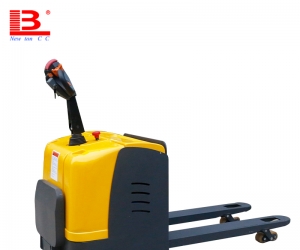
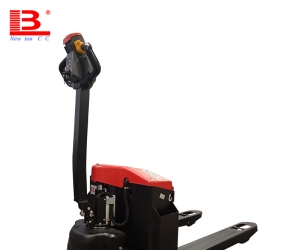
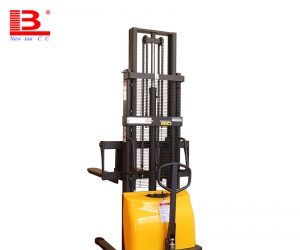
mini self-loading stacker, also known as truck-mounted forklift, effectively cuts labor costs, reduces operator fatigue and improves efficiency for frequent loading and unloading operations. It can handle cargo transportation and stacking after unloading, bringing multiple benefits and winning wide recognition. Buyers should fully understand the pricing of full electric self-loader price before procurement.
Three core factors determine its price, sorted based on 2026 market trends of light warehouse handling equipment and original quotation system of newnewton self-loading stackers. Market data references the 2026 quarterly monitoring report of China Forklift Network; technical parameters are sourced from newnewton official specification sheets.
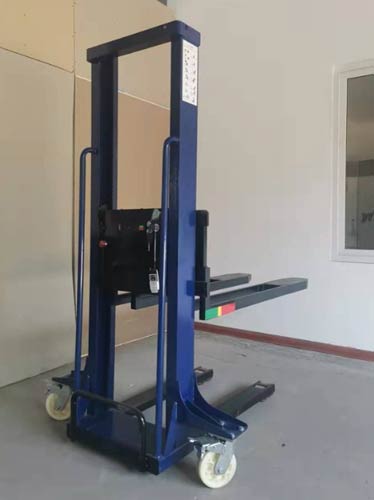
Rated load capacity & lifting height (basic pricing benchmark) Main specifications cover 0.5 ton and 1 ton; common lifting heights are 1.3 m and 1.6 m. Higher load capacity and lifting height require upgraded steel for masts, hydraulic cylinders and motors, pushing up overall machine costs. Standard 1.3m lifting models are preferred for regular box trucks. The 1.6m extended mast version suits higher unloading demands with extra charges.
Drive mode: semi-electric vs full electric travel Semi-electric self-loading stacker: electric lifting only, manual pushing and pulling. Lower entry price, suitable for sites with flat ground and low daily loading frequency. Full electric self-loading stacker: electric travel + electric lifting equipped with drive motors. It saves effort for long-distance transfer and is widely referred to as full electric self-loader. Higher purchasing cost, ideal for high-frequency urban distribution loading and unloading.
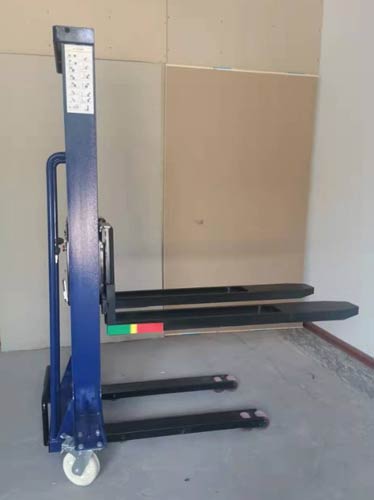
Battery type: obvious price gap between lead-acid and lithium iron phosphate batteries Standard maintenance-free lead-acid battery meets single-shift daily loading work. Upgraded lithium iron phosphate battery supports fast charging and longer cycle life, suitable for multi-route high-frequency delivery every day. Lithium upgrade usually costs an extra $550–$970.
2026 factory bare machine price range for reference
0.5 ton semi-electric self-loading stacker (1.3m lift, lead-acid battery): $1,940–$2,320
0.5 ton full electric self-loading stacker (1.3m lift, lead-acid battery): $2,420–$2,910
1 ton full electric self-loading stacker (1.3m lift, lead-acid battery): $2,970–$3,650
Note: Extra fees apply for extended masts, custom forks and lithium battery upgrades. Tiered discounts are available for bulk orders.
Prices of mini self-loading stacker vary widely on the market. You can judge equipment cost-effectiveness according to the above points to avoid unnecessary risks during procurement.
-
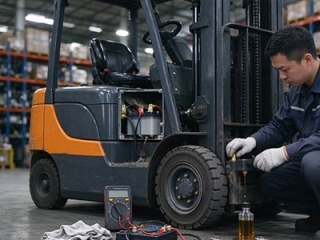 Reliability Of Newnewton Warehouse Forklifts For Heavy-Duty ShiftsWarehouse forklift reliability relies on industrial parts, reinforced frames and factory durability tests. Proper operation and maintenance reduce unexpected downtime.
Do you like ?0
Read more -
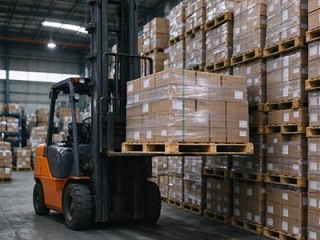 Forklift Configuration Strategy For Dense Warehousing, Warehouse ForkliftDense warehousing needs matched forklifts besides racks. Reach and trilateral stackers fit different layouts, coordinate aisle, load curve and floor for smooth handling.
Do you like ?0
Read more -
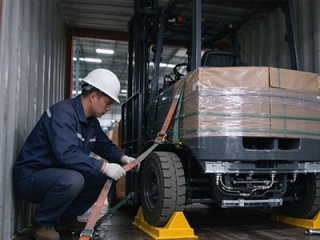 Full Container Supply For Export Forklifts, Forklift ManufacturerBulk forklift orders for overseas can ship by FCL or LCL. Newnewton FCL offers stable freight, safer packing and mixed models for large purchases.
Do you like ?0
Read more -
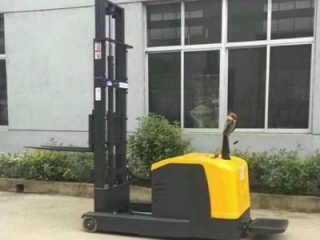 Stand-on Reach Stacker For Narrow Aisle Stacking, Mast Reach StructureStand-on reach stackers feature sliding masts that stay outside racks. They boost storage density in narrow aisles and require flat floors and standard pallets.
Do you like ?0
Read more -
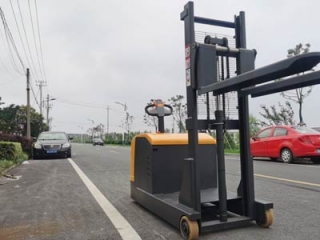 Stand-on Counterbalance Stacker For Various Pallets, Why No Leg RestrictionCounterbalance stackers have no front outriggers, using rear counterweight to avoid pallet interference. They fit various odd pallets yet need wider warehouse aisles.
Do you like ?0
Read more -
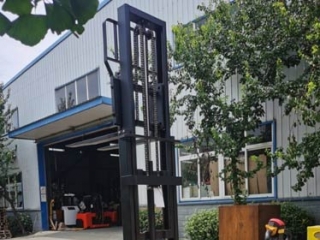 Custom Walk-Behind Counterbalance Stacker | Non-Standard ModificationsStandard walk-behind counterbalance stackers struggle with non-standard pallets and tight aisles. Customize load, lift, forks and structure, share working conditions for safe design.
Do you like ?0
Read more