
Semi-electric Stacker VS Manual Stacker Full Pros & Cons Comparison 2026
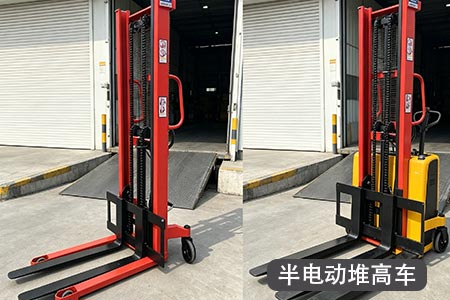
This article delivers a comprehensive Semi-electric Stacker VS Manual Stacker Pros & Cons Comparison, offering clear reference for procurement personnel to fully distinguish the two stackers and make all-round equipment selection decisions.
Semi-electric Stacker
Advantages
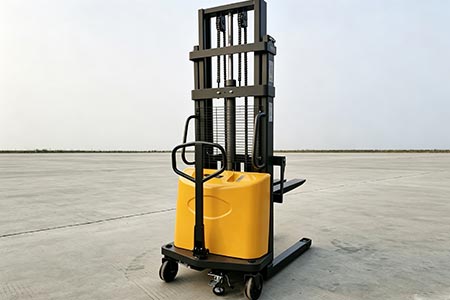
Lifting relies on motor-driven hydraulic system instead of manual pumping, effectively reducing operator fatigue during frequent stacking operations. Uniform and stable lifting speed shortens stacking cycle time, ideal for workplaces with repetitive pallet stacking tasks. Customizable extra-high mast options, with maximum lifting height generally over 3 meters, compatible with multi-layer high-level rack storage. Most models are equipped with sealed lithium batteries requiring no regular fluid replenishment; daily maintenance only includes wheel cleaning and pipeline inspection. Compact overall size fits standard warehouse aisles and freight elevators, taking up minimal storage space when idle.
Disadvantages
Built-in motors and batteries increase total dead weight. Heavy pushing resistance occurs under full load, making it unsuitable for long-distance cargo transportation. Equipped with extra electric parts including controllers, wiring harnesses and drive motors, bringing hidden electrical failure risks that pure mechanical manual stackers do not have. Operation relies on battery power. Electric lifting stops once power drains, requiring dedicated charging time; limited application in sites without stable power supply. Higher upfront procurement cost. Identical load capacity and basic lifting height models cost far more than manual hydraulic stackers. Strict ground condition requirements. Potholed floors, numerous thresholds and long slopes raise pushing resistance and accelerate wear of wheels and chassis.
Manual Hydraulic Stacker
Advantages
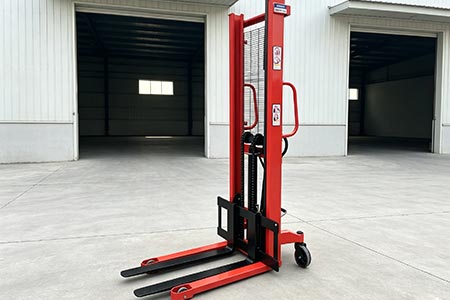
Pure mechanical hydraulic structure without electrical components, low purchase cost with light budget pressure for occasional low-frequency usage. Power-free operation allows normal work during power outages, in areas without charging sockets and explosion-proof workshops, boasting wider applicable scenarios. No battery counterweight leads to light overall weight. Flexible to push under empty or light load, perfect for tight spaces and container internal handling. Easy daily maintenance. Wearing parts only consist of oil seals, rollers and pin shafts; universal spare parts support self-replacement repair. Few failure points and stable mechanical performance. The truck can still operate normally after long-term idle storage.
Disadvantages
Lifting fully depends on manual foot pumping. Heavier loads and higher lifting heights demand more pumping cycles, causing severe fatigue after long-hour operation. Slow lifting progress with tiny height gain per pump stroke, extending total handling time for mass inbound and outbound cargo. Limited maximum lifting height. Standard versions top out at 2.5m; high-lift models become extremely heavy and hard to operate, unable to match racks with three or more tiers. Long-term frequent heavy-duty use speeds up abrasion of hydraulic pumps and cylinders, increasing the occurrence of oil seal leakage failures. Continuous pumping under high full load triggers frame shaking and weak stability of stacked goods at height.
In conclusion, semi-electric stackers and manual stackers have respective strengths to satisfy diverse warehouse operation demands. The above clear Semi-electric Stacker VS Manual Stacker Pros & Cons Comparison provides solid support for your equipment procurement.
-
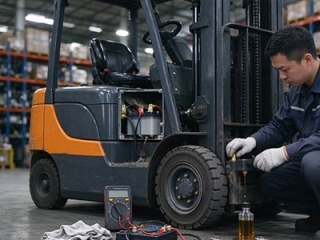 Reliability Of Newnewton Warehouse Forklifts For Heavy-Duty ShiftsWarehouse forklift reliability relies on industrial parts, reinforced frames and factory durability tests. Proper operation and maintenance reduce unexpected downtime.
Do you like ?0
Read more -
 Forklift Configuration Strategy For Dense Warehousing, Warehouse ForkliftDense warehousing needs matched forklifts besides racks. Reach and trilateral stackers fit different layouts, coordinate aisle, load curve and floor for smooth handling.
Do you like ?0
Read more -
 Full Container Supply For Export Forklifts, Forklift ManufacturerBulk forklift orders for overseas can ship by FCL or LCL. Newnewton FCL offers stable freight, safer packing and mixed models for large purchases.
Do you like ?0
Read more -
 Stand-on Reach Stacker For Narrow Aisle Stacking, Mast Reach StructureStand-on reach stackers feature sliding masts that stay outside racks. They boost storage density in narrow aisles and require flat floors and standard pallets.
Do you like ?0
Read more -
 Stand-on Counterbalance Stacker For Various Pallets, Why No Leg RestrictionCounterbalance stackers have no front outriggers, using rear counterweight to avoid pallet interference. They fit various odd pallets yet need wider warehouse aisles.
Do you like ?0
Read more -
 Custom Walk-Behind Counterbalance Stacker | Non-Standard ModificationsStandard walk-behind counterbalance stackers struggle with non-standard pallets and tight aisles. Customize load, lift, forks and structure, share working conditions for safe design.
Do you like ?0
Read more








