
How to Confirm Load Capacity for Warehouse Semi-electric Stacker
When purchasing semi-electric stackers for warehouses, buyers need to know common load capacity specifications of semi-electric stacker. While checking the rated load, high-position load attenuation should also be taken into consideration. It can prevent insufficient bearing capacity during stacking and guarantee normal warehouse stacking work. This article explains the rated load in detail for 1 ton semi-electric hydraulic stacker selection.
Definition of rated load The rated load of semi-electric stacker means the maximum cargo weight the equipment can stably bear at standard lifting height. The mainstream specifications on the market include 1 ton, 1.5 ton and 2 ton. Among them, 1 ton and 1.5 ton models are widely adopted in small and medium-sized warehouses.
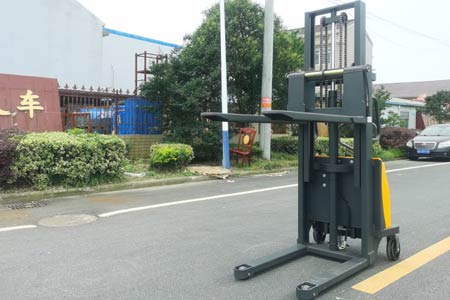
High-position load attenuation The higher the lifting height of the stacker, the lower the actual bearing capacity. Take the 1.5 ton semi-electric stacker as an example. Its actual allowable load will be less than 1.5 ton when the lifting height exceeds 3 meters. Buyers need to check the high-position load curve according to the maximum rack stacking height, instead of only referring to the tonnage on nameplate.
Cargo and pallet factors Calculate the total weight of goods and pallets. The total weight cannot exceed the allowable load at corresponding lifting height. Offset cargo center or overhanging goods will reduce stacker stability. A safety margin should be reserved.
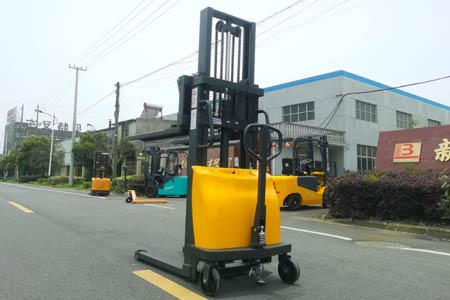
Safety margin reserved for working conditions For general warehouse application, it is recommended to reserve 15% to 20% load margin. Warehouses with frequent full-load and long-time continuous operation need larger margin. Long-term overload use will cause premature wear of hydraulic system and frame and increase failure risks.
1 ton semi-electric hydraulic stacker fits most small and medium-sized warehouses. You can evaluate cargo volume and turnover efficiency in your warehouse to choose this 1 ton stacker. Contact us if you have any doubts on model selection.
-
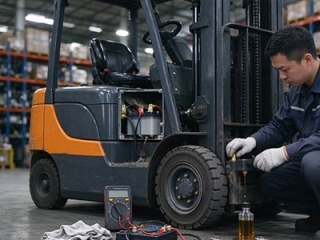 Reliability Of Newnewton Warehouse Forklifts For Heavy-Duty ShiftsWarehouse forklift reliability relies on industrial parts, reinforced frames and factory durability tests. Proper operation and maintenance reduce unexpected downtime.
Do you like ?0
Read more -
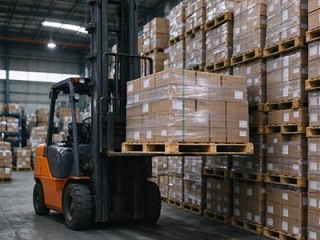 Forklift Configuration Strategy For Dense Warehousing, Warehouse ForkliftDense warehousing needs matched forklifts besides racks. Reach and trilateral stackers fit different layouts, coordinate aisle, load curve and floor for smooth handling.
Do you like ?0
Read more -
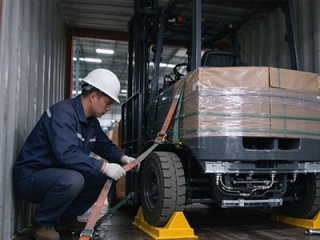 Full Container Supply For Export Forklifts, Forklift ManufacturerBulk forklift orders for overseas can ship by FCL or LCL. Newnewton FCL offers stable freight, safer packing and mixed models for large purchases.
Do you like ?0
Read more -
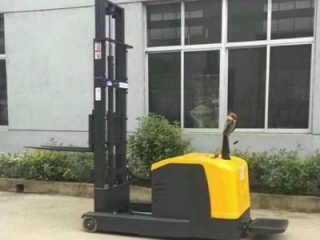 Stand-on Reach Stacker For Narrow Aisle Stacking, Mast Reach StructureStand-on reach stackers feature sliding masts that stay outside racks. They boost storage density in narrow aisles and require flat floors and standard pallets.
Do you like ?0
Read more -
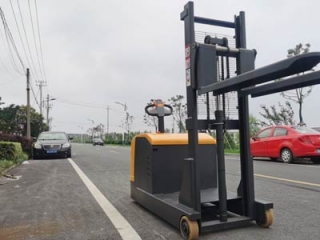 Stand-on Counterbalance Stacker For Various Pallets, Why No Leg RestrictionCounterbalance stackers have no front outriggers, using rear counterweight to avoid pallet interference. They fit various odd pallets yet need wider warehouse aisles.
Do you like ?0
Read more -
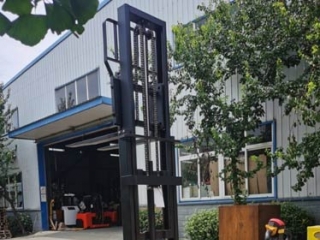 Custom Walk-Behind Counterbalance Stacker | Non-Standard ModificationsStandard walk-behind counterbalance stackers struggle with non-standard pallets and tight aisles. Customize load, lift, forks and structure, share working conditions for safe design.
Do you like ?0
Read more








