
Small Warehouse Stacker Buying Guide | Brand Ranking Analysis
Many small and medium warehouse purchasers refer to small tonnage stacker brand ranking when selecting stacking equipment. However, most online ranking lists adopt inconsistent statistical standards and cannot be used as the sole purchasing basis. Understanding forklift brand tier classification helps buyers select suitable stackers according to actual working conditions and budget, avoiding purchasing traps.
First-tier mainstream brands These long-established brands own complete production lines and nationwide after-sales networks with stable quality control, ideal for high-frequency continuous operations. They feature highly standardized spare parts for convenient later maintenance. The main disadvantage is higher pricing under the same parameters, suitable for large warehouses with sufficient budget and long-term equipment operation demands.
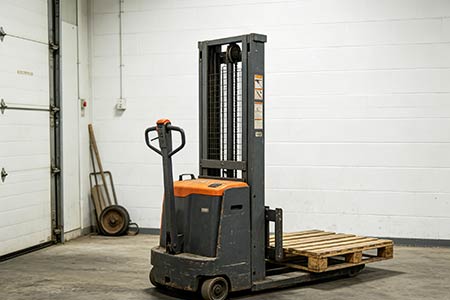
Cost-effective factory brands Most of these brands are professional source manufacturers focusing on warehouse stacking equipment. Without middle dealer markup, they offer more affordable prices and customizable configurations. Sufficient stock supports flexible delivery, matching intermittent operation scenarios of small and medium warehouses. Direct factory after-sales response brings reliable service for cost-oriented buyers.
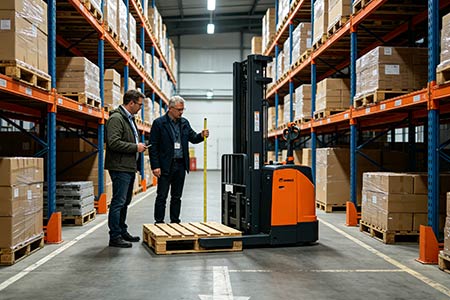
Niche economical brands Niche brands focus on ultra-low prices with compressed material costs and poor spare parts versatility. They are only applicable for occasional, low-frequency and light-load handling tasks. Long-term continuous operation easily causes component wear. With few after-sales outlets, later maintenance is troublesome, making them unsuitable for high-intensity warehouse work.
In conclusion, do not rely merely on small tonnage stacker brand ranking during procurement. Combine forklift brand tier classification, core component configuration, load attenuation data and warranty terms. Match equipment with your actual lifting height, operation frequency and pallet conditions to select cost-effective stackers under limited budget. Contact us for one-to-one professional warehouse equipment selection solutions.
-
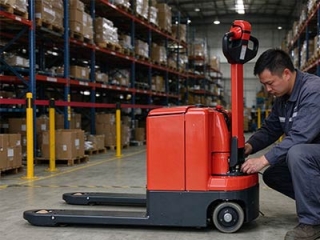 Maintenance Notes for Double Pallet Truck Under Heavy Warehouse LoadsOperators often ignore abnormal motor noise of double pallet trucks during rush orders. Continuous operation burns motors. Timely maintenance prevents failures.
Do you like ?0
Read more -
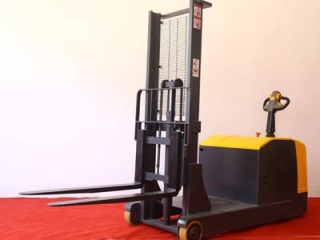 How to Get Accurate Quotations for Stand-on Counterbalance StackerStand-on counterbalance stackers rely on rear weight for stability and cost more. Battery, load, lift height and custom options affect final quotations.
Do you like ?0
Read more -
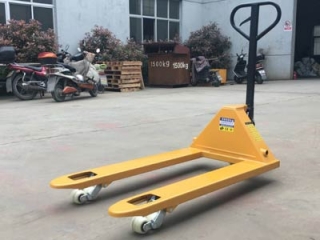 Manual Stacker Vs Pallet Jack: Key Operational Function DifferencesNew buyers confuse manual pallet trucks and manual stackers. They differ in lifting function. Pallet trucks for transfer, stackers for racking to avoid risks.
Do you like ?0
Read more -
 Custom Forklift Dimensions for Export to Fit Narrow Warehouse AislesForklift export faces size risks. Overseas orders may fail door, container or aisle fit. Customization needs balance of gravity, load and target market certifications.
Do you like ?0
Read more -
 Forklift Safety Management Guide Based on Special Equipment SpecificationsForklifts are special equipment. Follow TSG 81 with training, records, inspection and on-site control to prevent accidents and penalties.
Do you like ?0
Read more -
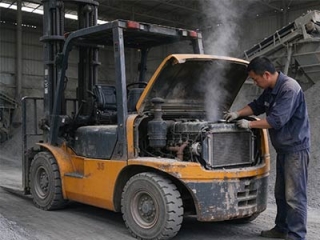 Heavy-Duty Diesel Forklift High Temperature Troubleshooting Guide3.5t diesel forklifts often overheat when handling sand and stone. Inspect cooling system step by step: radiator, belt, shroud, thermostat and water pump.
Do you like ?0
Read more








