Stand-on VS Walk-behind Counterbalance Stacker Selection Guide
Planning to adopt legless stackers and wondering how to choose between stand-on and walk-behind counterbalance stacker. Both models feature legless structure and fit a variety of warehouse scenarios, yet they differ greatly in operation experience and applicable conditions. We compare them from four dimensions to help enterprises finish equipment selection quickly.
Operation efficiency The stand-on counterbalance stacker comes with an operating platform. Operators ride along with the truck to sustain heavy continuous work. It works better for long-distance transport and high-volume stacking tasks and handles more pallets per hour.
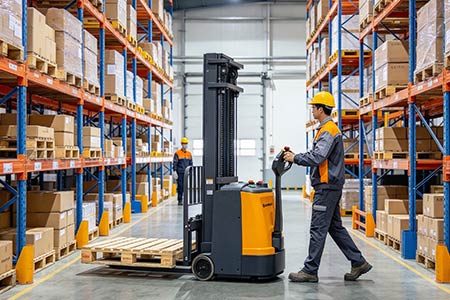
The walk-behind counterbalance stacker requires operators to walk behind the unit. Long-distance handling consumes more physical strength. It suits short-distance and intermittent stacking work for warehouses with small workload per shift.
Warehouse aisle space The walk-behind model has a more compact body and smaller turning radius, demanding narrower aisle width. It can move flexibly in old warehouses with limited space.
The stand-on version is equipped with an operator platform, resulting in larger overall dimensions and wider required aisle space. It is recommended for newly built warehouses with sufficient and regular aisle layout.
Procurement and maintenance cost For the same load capacity, walk-behind counterbalance stacker has a lower purchase price with fewer components. Its maintenance work is simple and spare parts cost less, ideal for buyers with limited budget and moderate usage frequency.
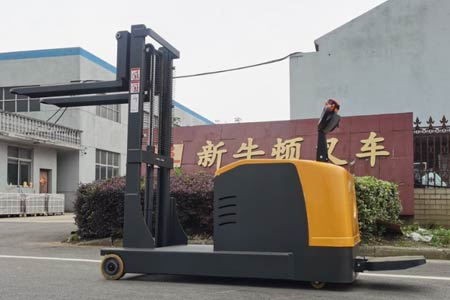
The stand-on model has a more complex structure. Extra control systems and platform protection parts raise manufacturing cost. It has a higher upfront price and requires more regular maintenance items, leading to higher long-term operating expense.
Operator handling and safety Walk-behind stacker is simple to operate with a low learning threshold. Operators follow the truck and can move away from the machine quickly, keeping collision risks relatively manageable.
For stand-on equipment, operators stay within the riding zone. Higher operation proficiency is required. Drivers must watch surrounding environment carefully during fast turning. Enterprises need to provide adequate safety training for operators.
In conclusion, business owners can select suitable counterbalance stacker according to actual demands. Both types have unique advantages. If your warehouse has heavy workload and long travel distance, stand-on counterbalance stacker is preferred. If aisles are narrow and operation frequency is moderate, walk-behind counterbalance stacker will be a better fit.
-
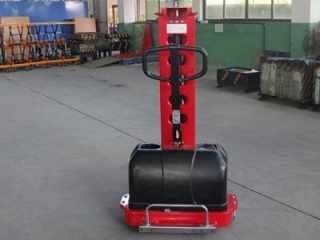 How Much Does an Electric Truck Mounted Forklift CostElectric truck-mounted forklift installs on truck tail for one-person loading. Prices range from 3000 to 6000 USD, check high lift load derating before purchase.
Do you like ?0
Read more -
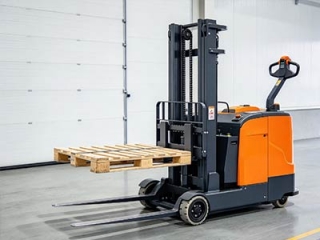 Lithium Electric Double Pallet Truck for Export CE CertifiedNewnewton lithium electric double pallet jack transports two pallets at once. Long battery life, CE certified & OEM available, meets EN ISO 3691 for overseas high-frequency warehouse handling.
Do you like ?0
Read more -
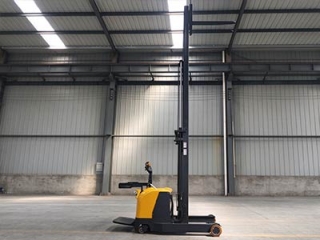 2 Ton Stand-on Reach Electric Stacker for Narrow Warehouse2 ton rider reach stacker with extendable mast fits narrow aisle & high rack warehouses. It boosts storage capacity without large warehouse reconstruction for frequent high stacking.
Do you like ?0
Read more -
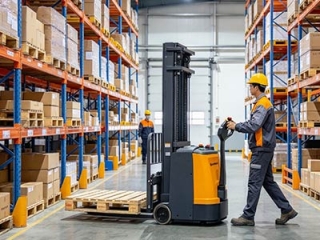 Stand-on VS Walk-behind Counterbalance Stacker Selection GuideRider & pedestrian counterbalance stackers have no outriggers. Compare operation efficiency, aisle space, cost and safety to select suitable models for your warehouse.
Do you like ?0
Read more -
 How to Operate Walk-behind Electric Pallet TruckLearn standard operating procedure for pedestrian electric pallet truck. Pre-operation check, loading, transport and unloading steps help new operators ensure safe & efficient warehouse handling.
Do you like ?0
Read more -
 How Much is Stand-on Counterbalance Electric StackerRider counterbalance stacker without outriggers works for ramps & special pallets. Prices vary by load, lift height, battery & options. Get quote & warehouse solution.
Do you like ?0
Read more