
Do You Need a Forklift License for Stand-on Electric Stacker | Operator
Do you need a forklift license for stand-on electric stacker? The certification status of operators is often overlooked during warehouse safety inspections. Many warehouse managers get confused about the work qualification requirements for stand-on full electric stacker. Non-compliance may lead to fines and potential safety accidents for enterprises. The key to judging certification requirements lies in equipment classification standards.
If the machine is equipped with a lifting mast and powered travel device for pallet stacking and handling within factory premises, it is classified as special motor vehicles used in factories. Operators must hold the N1 special equipment operation certificate. Such equipment needs registration and periodic annual inspection. It is a mandatory regulatory requirement for operators to hold valid certificates and cannot be waived.
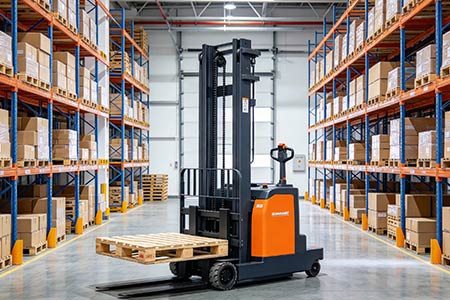
Some lightweight stand-on stacking equipment falls outside the scope of special equipment supervision and does not require the N1 certificate. However, operators cannot start work directly without training. Enterprises must arrange internal safety training, including equipment operation, pallet stacking and emergency braking practical assessment, and keep training records for internal safety management.
You can quickly judge the equipment type during procurement by checking two documents. Check the equipment category marked on the nameplate and the factory certificate to confirm whether it is included in the special equipment catalogue. The working scenario also needs to be considered. Most stackers for long-term stacking operations inside enclosed factories belong to special equipment.
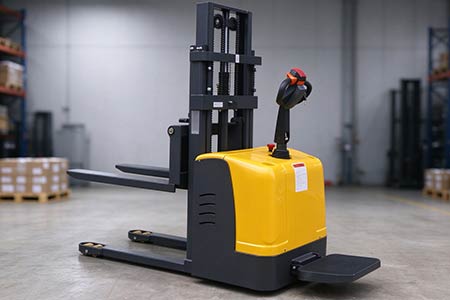
Operating special equipment vehicles without valid certificates will make enterprises liable once inspected or in case of cargo collapse and collision accidents. Even if the machine is not listed as special equipment, insufficient pre-job training increases the risk of on-site safety incidents, which may cause cargo damage or personal injury.
When planning warehouse equipment solutions, besides comparing load capacity, lifting height and aisle size, personnel qualification should also be evaluated in advance. Arrange certified operators or set up internal training procedures to keep warehouse operations fully compliant. If you have questions about selecting stand-on full electric stacker, consult the manufacturer for detailed specifications.
-
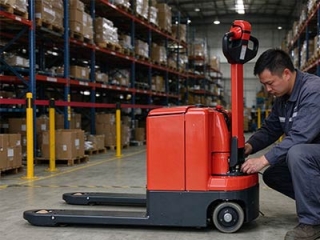 Maintenance Notes for Double Pallet Truck Under Heavy Warehouse LoadsOperators often ignore abnormal motor noise of double pallet trucks during rush orders. Continuous operation burns motors. Timely maintenance prevents failures.
Do you like ?0
Read more -
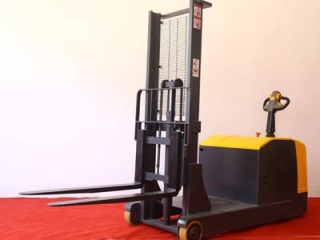 How to Get Accurate Quotations for Stand-on Counterbalance StackerStand-on counterbalance stackers rely on rear weight for stability and cost more. Battery, load, lift height and custom options affect final quotations.
Do you like ?0
Read more -
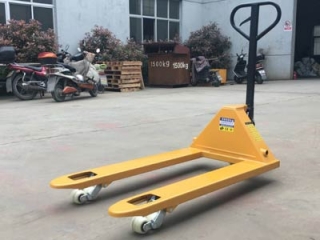 Manual Stacker Vs Pallet Jack: Key Operational Function DifferencesNew buyers confuse manual pallet trucks and manual stackers. They differ in lifting function. Pallet trucks for transfer, stackers for racking to avoid risks.
Do you like ?0
Read more -
 Custom Forklift Dimensions for Export to Fit Narrow Warehouse AislesForklift export faces size risks. Overseas orders may fail door, container or aisle fit. Customization needs balance of gravity, load and target market certifications.
Do you like ?0
Read more -
 Forklift Safety Management Guide Based on Special Equipment SpecificationsForklifts are special equipment. Follow TSG 81 with training, records, inspection and on-site control to prevent accidents and penalties.
Do you like ?0
Read more -
 Heavy-Duty Diesel Forklift High Temperature Troubleshooting Guide3.5t diesel forklifts often overheat when handling sand and stone. Inspect cooling system step by step: radiator, belt, shroud, thermostat and water pump.
Do you like ?0
Read more








