What Faults Are Prone to Walk-behind Straddle Stacker | Troubles & Solutions
What faults may occur on walk-behind straddle stacker? Walk-behind straddle stacker faults often disrupt daily warehouse operations. Walk-behind electric straddle stacker delivers reliable performance in warehouse applications, yet failures may still happen after continuous use. Unexpected breakdowns of walk-behind straddle stacker in the middle of handling work will disrupt warehouse material circulation. Recognizing typical walk-behind straddle stacker faults ahead of time and taking preventive measures can cut downtime and efficiency losses.
Weak fork lifting usually originates from the hydraulic circuit. Degraded hydraulic oil, insufficient oil level or aging leaking seals will reduce hydraulic pressure, making the forks lift slowly or unable to carry loads. Check the cylinder surface for oil marks during routine inspection, and replace qualified hydraulic oil periodically to slow the wear of sealing parts.
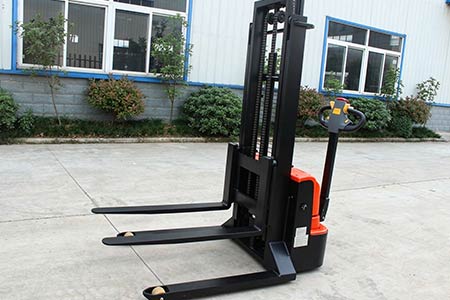
Intermittent traveling power, sudden start and stop, mostly relates to electrical connections. Wire connectors get loose under continuous vibration, and oxidized battery terminals cause unstable power supply. Walk-behind electric straddle stacker often works in dusty warehouses, and accumulated dust speeds up terminal oxidation. Clean terminals and tighten loose plugs before each shift to lower the risk of open circuits.
Brake failure or brake sticking belongs to critical safety issues. Extended operation wears brake pads and shifts brake adjustment clearance, resulting in insensitive braking or stuck brakes. Test braking performance briefly before work. Adjust clearance or replace brake pads promptly once slow response appears, removing potential safety risks.
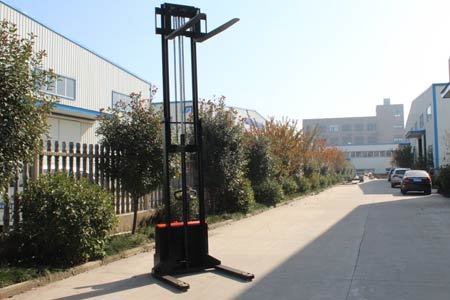
Abnormal noise and deformation on outriggers are unique faults for walk-behind straddle stacker. The straddle outrigger structure is built to fit different pallet sizes. Heavy loads on uneven ground create metallic noise, and repeated overloading will bring permanent deformation. Operate on flat ground and never exceed rated load to protect outriggers from excessive stress.
Unresponsive buttons on the control panel are caused by dust and moisture seeping inside, or aging internal contacts from frequent pressing. Avoid long operation in humid conditions. Wipe the control panel only with dry cloth; never rinse the electronic control area directly with water.
Grasping these five troubleshooting and prevention tips helps you respond rapidly when walk-behind electric straddle stacker meets faults, keeping warehouse handling efficient. For complicated malfunctions hard to fix on site, turn to professional maintenance technicians for service.
-
 Reliability Of Newnewton Warehouse Forklifts For Heavy-Duty ShiftsWarehouse forklift reliability relies on industrial parts, reinforced frames and factory durability tests. Proper operation and maintenance reduce unexpected downtime.
Do you like ?0
Read more -
 Forklift Configuration Strategy For Dense Warehousing, Warehouse ForkliftDense warehousing needs matched forklifts besides racks. Reach and trilateral stackers fit different layouts, coordinate aisle, load curve and floor for smooth handling.
Do you like ?0
Read more -
 Full Container Supply For Export Forklifts, Forklift ManufacturerBulk forklift orders for overseas can ship by FCL or LCL. Newnewton FCL offers stable freight, safer packing and mixed models for large purchases.
Do you like ?0
Read more -
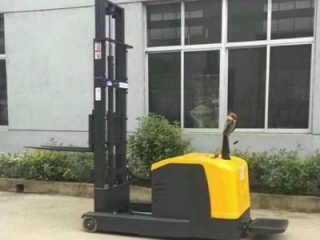 Stand-on Reach Stacker For Narrow Aisle Stacking, Mast Reach StructureStand-on reach stackers feature sliding masts that stay outside racks. They boost storage density in narrow aisles and require flat floors and standard pallets.
Do you like ?0
Read more -
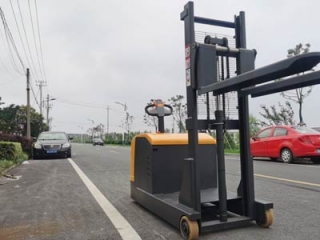 Stand-on Counterbalance Stacker For Various Pallets, Why No Leg RestrictionCounterbalance stackers have no front outriggers, using rear counterweight to avoid pallet interference. They fit various odd pallets yet need wider warehouse aisles.
Do you like ?0
Read more -
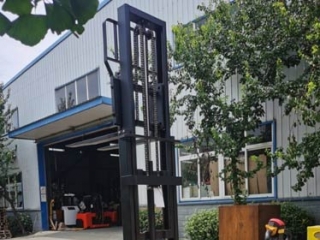 Custom Walk-Behind Counterbalance Stacker | Non-Standard ModificationsStandard walk-behind counterbalance stackers struggle with non-standard pallets and tight aisles. Customize load, lift, forks and structure, share working conditions for safe design.
Do you like ?0
Read more