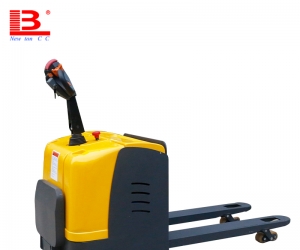
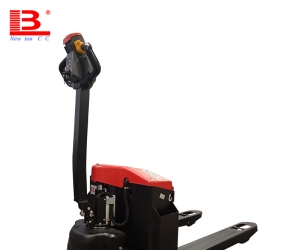
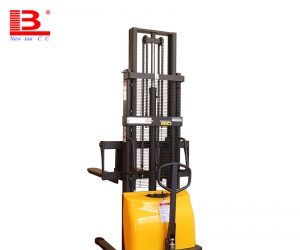
Walk-behind Straddle Full Electric Stacker Maintenance Checklist
Many operators find the Walk-behind Straddle Full Electric Stacker convenient within the first one or two years. Without proper maintenance, accelerated component wear will drive up repair costs and cause operational delays. Below is a complete maintenance schedule for the Straddle Full Electric Stacker Maintenance.
Daily Pre-shift Inspection (5 minutes mandatory)
Focus: Inspect straddle legs for collision damage to eliminate hidden risks in advance.
Straddle leg assembly: Check both legs for bending & deformation. Ensure straddle rollers rotate freely without jamming or severe uneven wear. Tighten loose fixing bolts and clear plastic scraps, wood chips and debris trapped between straddle legs. Practical tests show regular debris removal reduces roller seizure failures by over 60%.
Mast & forks: Test full lifting cycles under no load; operation should be smooth with no abnormal noise. Verify forks free of cracks or bending, and upper/lower limit switches respond sensitively.
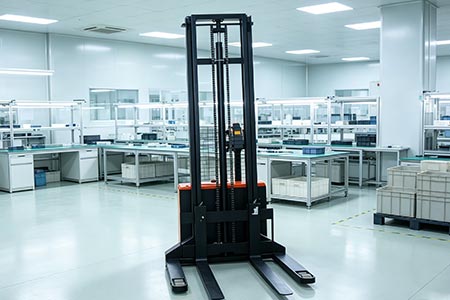
Hydraulic system: Check hydraulic oil level after machine shutdown. Inspect cylinders, hoses and fittings for leakage; lifting speed must remain stable without surging.
Travel & braking system: Confirm forward/reverse movement works smoothly. Test reliable electromagnetic brake and parking brake; check drive wheel wear condition.
Electrical & lithium battery system: Battery terminals should be tight and corrosion-free. Emergency stop button and warning buzzer must function normally. Never flush the electric control box directly with water.
Weekly Maintenance (Trigger at 50 accumulated working hours)
Apply dedicated lubricating grease to mast lifting chains and guide rollers; adjust chain tension.
Prioritize servicing straddle leg roller bearings and hinge joints with grease to eliminate dry friction noise and excessive abrasion.
Fully tighten all connecting bolts on chassis, straddle cross beams and mast base.
Clear dust from hydraulic dust boots and cooling air ducts.
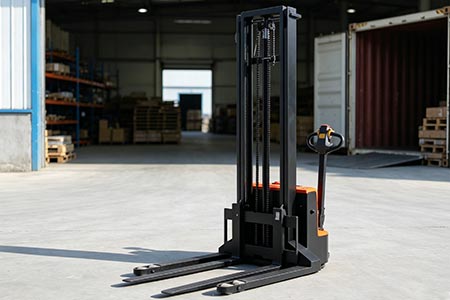
Record roller wear status; report heavily worn rollers for spare part procurement in advance.
Monthly In-depth Maintenance (Trigger at 200 accumulated working hours)
Special inspection for Walk-behind Straddle Full Electric Stacker straddle legs: Check cross beams for hidden deformation; disassemble and remove dust from roller bearings. Failure to service bearings monthly easily causes single-side roller seizure, triggering pallet tilting and cargo falling hazards.
Hydraulic system inspection: Replace hydraulic oil and full set of seals promptly if oil turns black or turbid to stop persistent leakage.
Drive motor maintenance: Clear dust accumulated on brushless motor housing, replenish bearing grease and monitor operating current.
Lithium battery inspection: Check voltage of each single cell, clean terminal oxidation and inspect wiring insulation for damage.
Calibrate mast verticality to avoid accelerated unilateral wear caused by long-term offset loading. Fill complete maintenance logs for safety supervision audits.
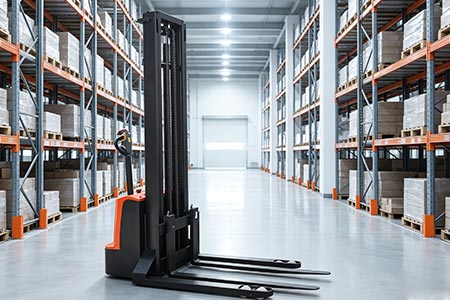
Special Maintenance Reminders For Straddle Stackers
Never overload or offset loads. Long-term overload on one straddle leg leads to cross beam deformation.
Reduce speed when crossing uneven ground to avoid violent impact on straddle legs.
Unlike outrigger-free counterbalance stackers, straddle rollers are high-frequency wearing parts; lubrication cannot be skipped.
Avoid using irregular non-standard pallets to prevent scraping and squeezing damage to straddle leg structures.
This tiered daily, weekly and monthly maintenance checklist complies with GB/T44361-2024 Industrial trucks — Specification of inspection and maintenance and Newnewton 2026 official service standards, highlighting exclusive inspection items for walk-behind straddle full electric stackers.
-
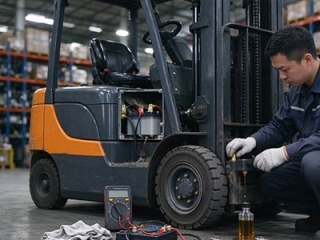 Reliability Of Newnewton Warehouse Forklifts For Heavy-Duty ShiftsWarehouse forklift reliability relies on industrial parts, reinforced frames and factory durability tests. Proper operation and maintenance reduce unexpected downtime.
Do you like ?0
Read more -
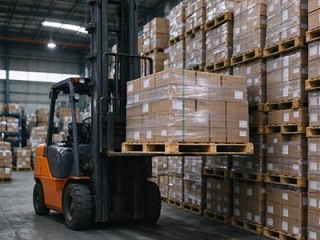 Forklift Configuration Strategy For Dense Warehousing, Warehouse ForkliftDense warehousing needs matched forklifts besides racks. Reach and trilateral stackers fit different layouts, coordinate aisle, load curve and floor for smooth handling.
Do you like ?0
Read more -
 Full Container Supply For Export Forklifts, Forklift ManufacturerBulk forklift orders for overseas can ship by FCL or LCL. Newnewton FCL offers stable freight, safer packing and mixed models for large purchases.
Do you like ?0
Read more -
 Stand-on Reach Stacker For Narrow Aisle Stacking, Mast Reach StructureStand-on reach stackers feature sliding masts that stay outside racks. They boost storage density in narrow aisles and require flat floors and standard pallets.
Do you like ?0
Read more -
 Stand-on Counterbalance Stacker For Various Pallets, Why No Leg RestrictionCounterbalance stackers have no front outriggers, using rear counterweight to avoid pallet interference. They fit various odd pallets yet need wider warehouse aisles.
Do you like ?0
Read more -
 Custom Walk-Behind Counterbalance Stacker | Non-Standard ModificationsStandard walk-behind counterbalance stackers struggle with non-standard pallets and tight aisles. Customize load, lift, forks and structure, share working conditions for safe design.
Do you like ?0
Read more