
Custom‑Built Three‑Way Stacker‑Picker & How To Evaluate Manufacturer
For narrow‑aisle and high‑bay warehouses, custom‑built three‑way stacker‑picker delivers high‑efficiency operation. This forklift features relatively complex structure with high technical requirements, integrating stacking and high‑level order‑picking functions. Purchasing is not recommended without a reliable three‑way stacker‑picker production factory. Multi‑dimensional evaluation of manufacturers before order placement helps you avoid risks.
Past custom‑project delivery experience. The core technical challenge lies in coordination among mast, three‑way rotating forks and elevating picking platform. Ordinary stacker factories lack corresponding modification capability. Prioritize reviewing real completed cases including man‑up picking, high‑lifting customization and special working conditions such as cold‑storage and ultra‑narrow aisle, instead of only checking demo prototypes.
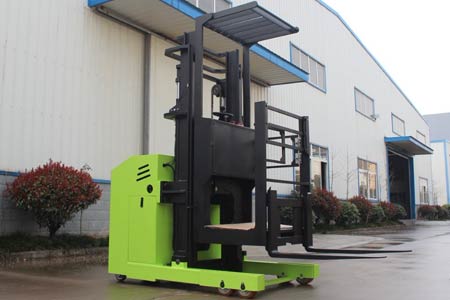
Confirm the factory owns independent solution design capacity rather than merely assembling outsourced assemblies. Request site‑survey documents, engineering drawings and load‑curve calculation reports. Qualified suppliers can adjust structures according to aisle width, rack height and pallet specifications.
Inspect production and quality‑control conditions. High precision is required for mast welding, hydraulic piping assembly and rotating‑mechanism tolerance. Reliable manufacturers are equipped with mast‑processing tooling and hydraulic pressure‑testing stations. Full‑load high‑bay stacking plus picking‑platform lifting combined test shall be performed before delivery.
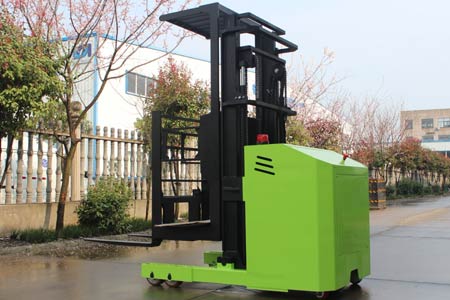
Ask for factory inspection reports implemented according to industry standard JB/T 15163‑2025 for three‑way stacking forklifts, and focus on high‑altitude load‑attenuation data. Stay away from OEM‑only traders without complete testing procedures. Untested non‑standard units tend to suffer oil leakage and shaking failures.
Flexibility of core configuration adjustment. Clarify supply sources of key components including drive motor, hydraulic pump, rotating cylinder and platform safety locking assemblies, which largely determine equipment stability. Customizable items cover picking‑platform dimension, fork rotation angle, guidance mode, lithium‑ion / lead‑acid battery, low‑temperature protection and operator layout.
Trustworthy manufacturers provide multiple configuration options, clarify modifiable and non‑modifiable structures, and illustrate how adjustments affect rated load and lifting height. They will not blindly accept custom requirements beyond structural safety limits.
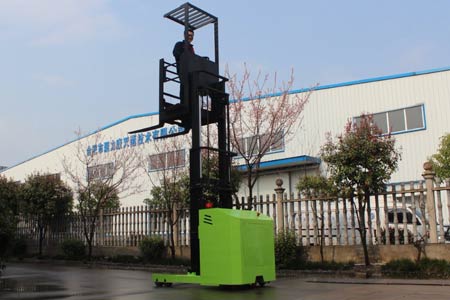
Verify complete compliance documents. Three‑way stacker‑picker belongs to industrial vehicle category, and customized versions also need full technical files. For domestic usage, check product certificate and factory test reports. For export orders, confirm complete CE technical documents match customized units instead of re‑using certificates for standard models.
Deliverable documents include general assembly drawings, load‑curve charts, operation manual, maintenance manual and wearing‑parts list. Missing documents after customization will cause troubles for annual inspection, after‑sales maintenance and customs clearance.
Customization for three‑way stacker‑picker is essential for good warehouse matching and stable stacking‑picking efficiency. Turn to qualified manufacturers for safe and high‑quality equipment. You may send your warehouse parameters and supplier configuration proposals for professional assessment.
-
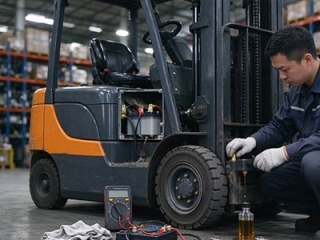 Reliability Of Newnewton Warehouse Forklifts For Heavy-Duty ShiftsWarehouse forklift reliability relies on industrial parts, reinforced frames and factory durability tests. Proper operation and maintenance reduce unexpected downtime.
Do you like ?0
Read more -
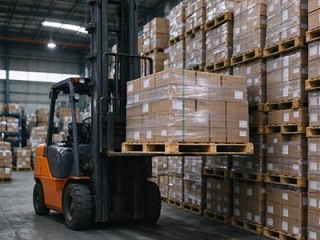 Forklift Configuration Strategy For Dense Warehousing, Warehouse ForkliftDense warehousing needs matched forklifts besides racks. Reach and trilateral stackers fit different layouts, coordinate aisle, load curve and floor for smooth handling.
Do you like ?0
Read more -
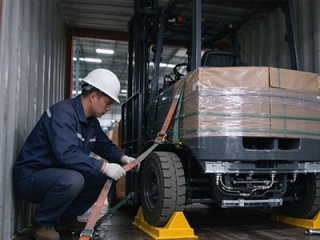 Full Container Supply For Export Forklifts, Forklift ManufacturerBulk forklift orders for overseas can ship by FCL or LCL. Newnewton FCL offers stable freight, safer packing and mixed models for large purchases.
Do you like ?0
Read more -
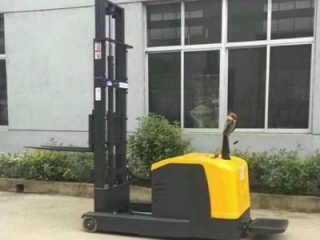 Stand-on Reach Stacker For Narrow Aisle Stacking, Mast Reach StructureStand-on reach stackers feature sliding masts that stay outside racks. They boost storage density in narrow aisles and require flat floors and standard pallets.
Do you like ?0
Read more -
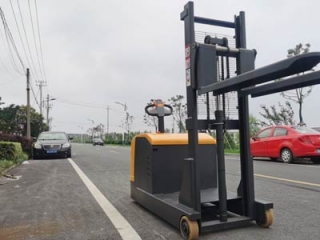 Stand-on Counterbalance Stacker For Various Pallets, Why No Leg RestrictionCounterbalance stackers have no front outriggers, using rear counterweight to avoid pallet interference. They fit various odd pallets yet need wider warehouse aisles.
Do you like ?0
Read more -
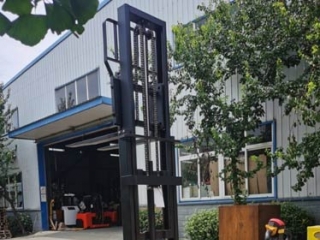 Custom Walk-Behind Counterbalance Stacker | Non-Standard ModificationsStandard walk-behind counterbalance stackers struggle with non-standard pallets and tight aisles. Customize load, lift, forks and structure, share working conditions for safe design.
Do you like ?0
Read more








