
Walk-behind Counterbalance Stacker Price | 2026 Factory Direct Quotation
For warehouses handling various pallet sizes, heavy loads and narrow aisles, counterbalance stackers serve as ideal handling equipment. Many purchasers ask Walk-behind Counterbalance Stacker Price. This article summarizes factory quotations for reference during warehouse procurement.
Data collected from domestic warehouse equipment manufacturers’ spot prices (June-July 2026):
1 ton capacity, lifting height 2.5–3 m Basic lead-acid model: ¥8,800–11,000 Upgraded industrial lithium version: ¥10,500–13,000 Application: Small warehouses with low-level racks, light goods, working time within 3 hours per day.
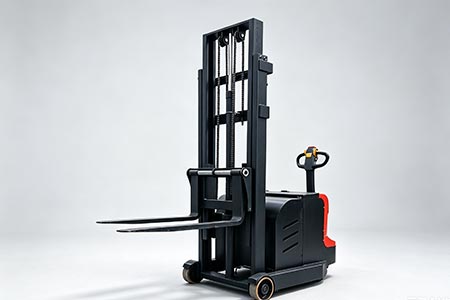
1.5 ton capacity, lifting height 3–3.5 m (mainstream model) Standard lead-acid model: ¥11,500–14,500 Standard brushless lithium model: ¥13,500–16,800 Application: Regular stacking for hardware, auto parts and e-commerce raw material warehouses.
2 ton capacity, reinforced mast, lifting height 3–4 m Lead-acid model: ¥15,000–18,500 High-spec brushless lithium model: ¥17,000–21,000 Application: Heavy materials, two-shift high-frequency continuous operation.
Important notes: Triple stage mast is required for lifting heights over 3.5m, adding ¥1,000–3,000 to total cost. Extra fees apply for fork side shift and customized non-standard dimensions. Retail prices from dealers are generally 15%–25% higher than factory ex-work prices.
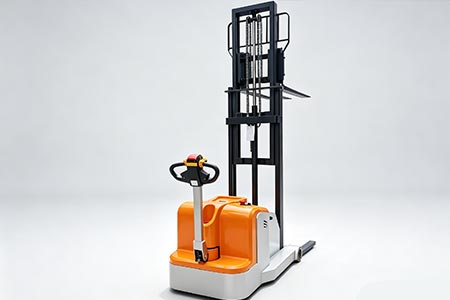
Some buyers blindly cut budgets and select low-spec models, leading to two major hidden risks:
Reduced effective rated load at high lifting heights, unable to operate under full load;
Frequent breakdowns of old brushed motors, resulting in downtime losses far exceeding the price difference of equipment.
Recommended selection rules based on working conditions: Choose basic lead-acid brushed models if daily operation is less than 3 hours for short-term temporary use. Prioritize brushless lithium configuration for daily operation over 4 hours and long-term stable service; it delivers better value when calculating full lifecycle costs. Confirm warehouse aisle width and pallet types before purchase. Sufficient turning space must be reserved for the Walk-behind Counterbalance Stacker.
Feel free to contact us if you have further questions about model selection and quotations.
-
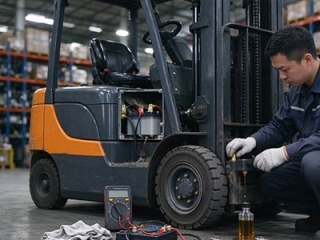 Reliability Of Newnewton Warehouse Forklifts For Heavy-Duty ShiftsWarehouse forklift reliability relies on industrial parts, reinforced frames and factory durability tests. Proper operation and maintenance reduce unexpected downtime.
Do you like ?0
Read more -
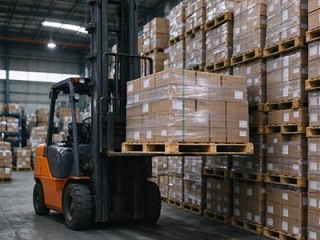 Forklift Configuration Strategy For Dense Warehousing, Warehouse ForkliftDense warehousing needs matched forklifts besides racks. Reach and trilateral stackers fit different layouts, coordinate aisle, load curve and floor for smooth handling.
Do you like ?0
Read more -
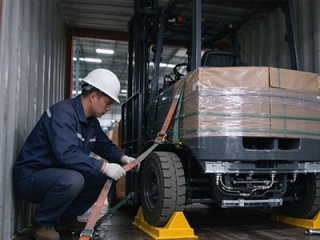 Full Container Supply For Export Forklifts, Forklift ManufacturerBulk forklift orders for overseas can ship by FCL or LCL. Newnewton FCL offers stable freight, safer packing and mixed models for large purchases.
Do you like ?0
Read more -
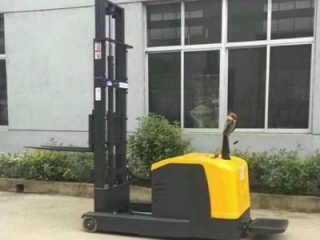 Stand-on Reach Stacker For Narrow Aisle Stacking, Mast Reach StructureStand-on reach stackers feature sliding masts that stay outside racks. They boost storage density in narrow aisles and require flat floors and standard pallets.
Do you like ?0
Read more -
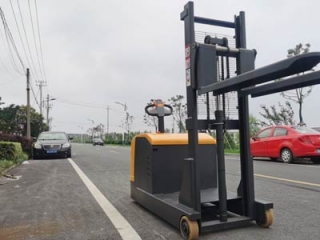 Stand-on Counterbalance Stacker For Various Pallets, Why No Leg RestrictionCounterbalance stackers have no front outriggers, using rear counterweight to avoid pallet interference. They fit various odd pallets yet need wider warehouse aisles.
Do you like ?0
Read more -
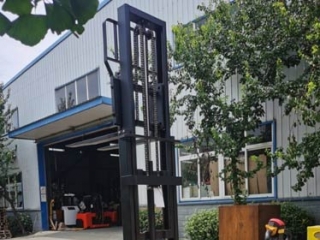 Custom Walk-Behind Counterbalance Stacker | Non-Standard ModificationsStandard walk-behind counterbalance stackers struggle with non-standard pallets and tight aisles. Customize load, lift, forks and structure, share working conditions for safe design.
Do you like ?0
Read more








