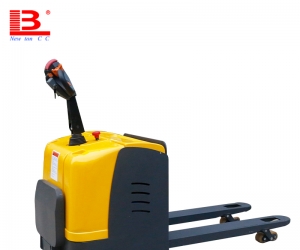
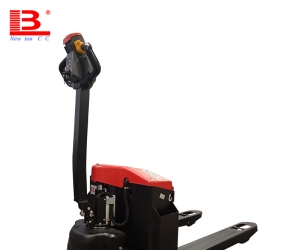
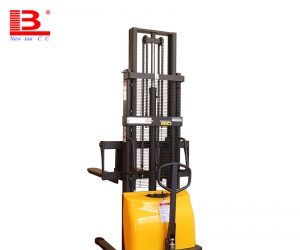
Walk‑Behind Electric Pallet Truck | Operation Instruction Guide
The walk‑behind pallet truck is widely adopted in warehouse logistics. It works flexibly in high‑density storage space to finish material handling tasks and help enterprises cut costs and improve efficiency. This 7‑step practical tutorial helps operators get familiar with walk‑behind electric pallet truck and master standard operation quickly.
Step 1: Pre‑operation inspection, never run faulty equipment Check forks and body for deformation or cracks, inspect wheels for damage and jamming. Confirm battery level; recharge timely when power is low and avoid deep‑discharge operation. Test emergency stop button, horn and brake sensitivity, and clear obstacles in working aisle. Stop operation immediately if oil leakage, pressure drop or loose wiring occurs. Do not force the unit to work.
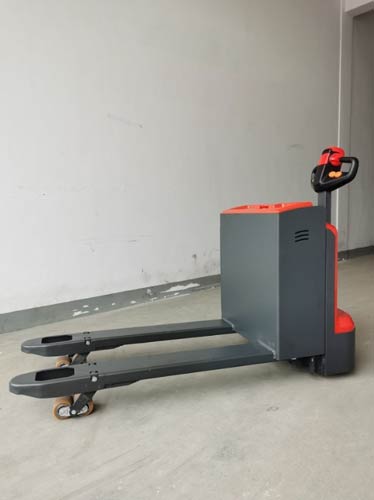
Step 2: Power‑on unlock and no‑load test Turn the key switch to power‑on position and wait for instrument self‑check. Complete password or sensor unlock for corresponding models to enter standby mode. Test fork lifting and lowering without load, ensure smooth movement without abnormal noise before cargo handling.
Step 3: Align and insert forks into pallet Drive at low speed, center forks and fully insert them under pallet base. Avoid partial insertion or offset forks. Adjust angle for special‑shaped goods or single‑sided pallets to keep even force. Never fork cargo on one side or crash pallets at high speed.
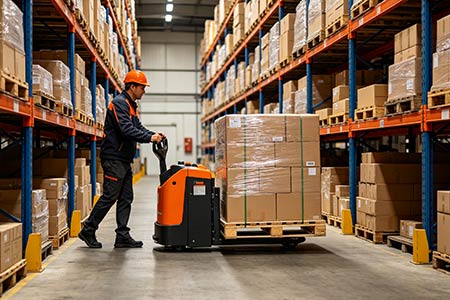
Step 4: Lift cargo to proper ground clearance Press lifting button and lift goods 5‑10 cm above ground. Excessive lifting raises center of gravity and brings tipping risk. Confirm stable cargo condition before travelling.
Step 5: Low‑speed travelling and follow warehouse traffic rules Keep low travelling speed all the time. Slow down and sound horn at corners and crowded zones. Avoid sharp acceleration, sudden braking and sharp spot turning to prevent cargo slipping. Give way to pedestrians and stop for obstacles. Overload and offset‑load operation are strictly forbidden.
Step 6: Align for unloading, retract forks after full landing Arrive at unloading position at low speed. Press lowering button until cargo touches ground completely. Retract forks only after goods are placed steadily. Never drag pallets before full landing.
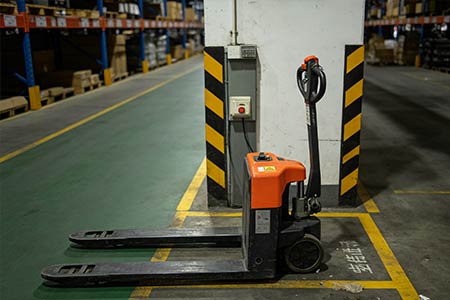
Step 7: Power‑off and daily maintenance after work Park the truck at designated area with forks fully lowered to ground. Turn off key switch and activate emergency stop. Clean debris on wheels and body. Recharge when battery runs low and avoid long‑term storage with low power. Do not block fire exits or traffic lanes.
Core safety prohibitions: No overloading, single‑side forking or personnel carrying. Do not travel crosswise or turn on ramps. Slow down on wet slippery ground. Shut down and cut power once faults appear. Unauthorized personnel are not allowed to operate the truck.
Contact us for tutorial videos or on‑site trial service of walk‑behind electric pallet truck.
-
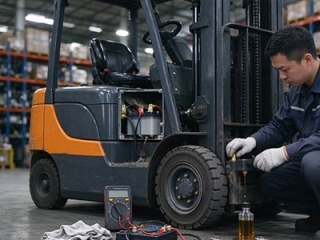 Reliability Of Newnewton Warehouse Forklifts For Heavy-Duty ShiftsWarehouse forklift reliability relies on industrial parts, reinforced frames and factory durability tests. Proper operation and maintenance reduce unexpected downtime.
Do you like ?0
Read more -
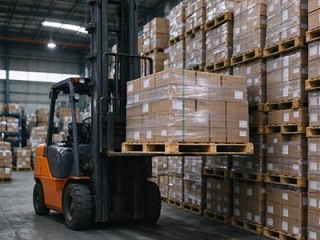 Forklift Configuration Strategy For Dense Warehousing, Warehouse ForkliftDense warehousing needs matched forklifts besides racks. Reach and trilateral stackers fit different layouts, coordinate aisle, load curve and floor for smooth handling.
Do you like ?0
Read more -
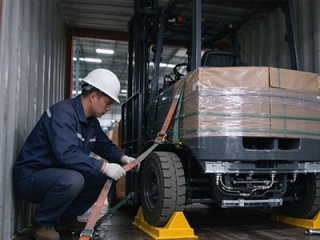 Full Container Supply For Export Forklifts, Forklift ManufacturerBulk forklift orders for overseas can ship by FCL or LCL. Newnewton FCL offers stable freight, safer packing and mixed models for large purchases.
Do you like ?0
Read more -
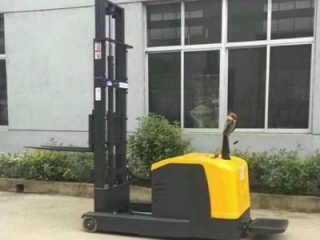 Stand-on Reach Stacker For Narrow Aisle Stacking, Mast Reach StructureStand-on reach stackers feature sliding masts that stay outside racks. They boost storage density in narrow aisles and require flat floors and standard pallets.
Do you like ?0
Read more -
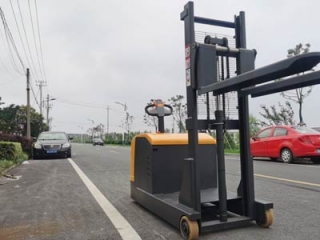 Stand-on Counterbalance Stacker For Various Pallets, Why No Leg RestrictionCounterbalance stackers have no front outriggers, using rear counterweight to avoid pallet interference. They fit various odd pallets yet need wider warehouse aisles.
Do you like ?0
Read more -
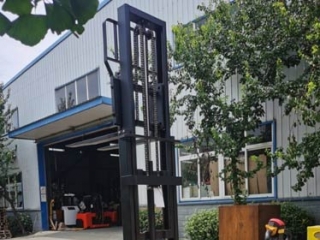 Custom Walk-Behind Counterbalance Stacker | Non-Standard ModificationsStandard walk-behind counterbalance stackers struggle with non-standard pallets and tight aisles. Customize load, lift, forks and structure, share working conditions for safe design.
Do you like ?0
Read more