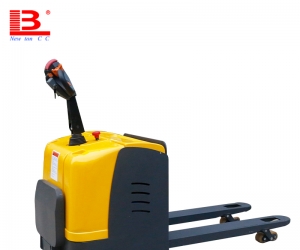
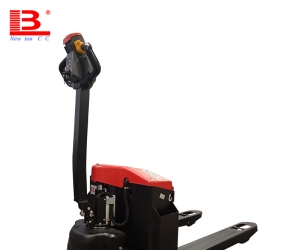
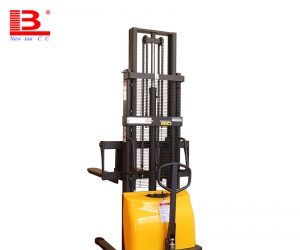
Double Pallet Stacker Maintenance | 4 Cycles of Professional Servicing Tips
The rider‑operated double‑pallet stacker is widely used in e‑commerce warehouses and high‑turnover storage scenarios. High‑frequency operation brings heavy load to the whole unit. Without periodic electric double‑pallet stacker maintenance, faults such as jerky lifting and steering failure may occur, delaying schedules and lowering goods turnover efficiency. Below are four key scheduled service points.
Daily maintenance (after each shift) Daily service focuses on visual inspection and function check after every working shift. Clear carton scraps, plastic straps and dust from forks, mast chains and wheel gaps to avoid foreign‑object jamming on moving parts.
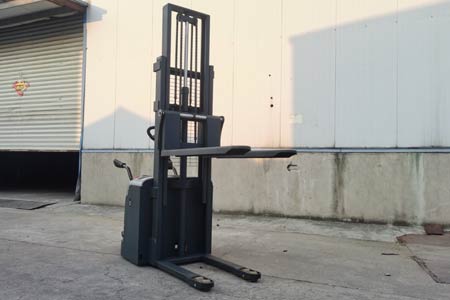
Check forks for deformation and cracks, inspect chain slackness. Test lifting, travelling, brake and emergency‑stop functions. Monitor battery level and recharge in time to prevent deep discharge. Park equipment in designated area with forks fully lowered and cut off power. Record abnormalities including oil leakage and strange noise. Do not operate faulty units on next working day.
Weekly maintenance (accumulated 40‑50 working hours) Weekly service mainly covers transmission and movable mechanical parts. Apply grease to mast chains and roller bearings to reduce wear and abnormal noise. Keep left and right chains at identical tension.
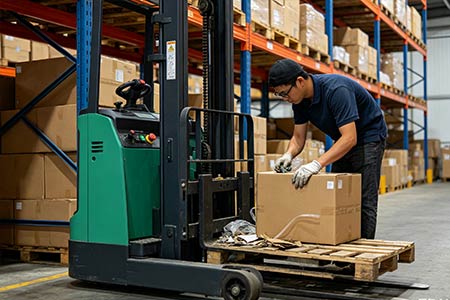
Tighten bolts on chassis and mast, inspect pipe joints for oil seepage. Mark heavily‑worn drive and load wheels for upcoming replacement. Keep battery terminals clean, non‑oxidized and firmly connected. Run full no‑load lifting cycles to check hydraulic pressure‑drop and sliding risks.
Monthly maintenance (accumulated 180‑200 working hours) Monthly service carries out in‑depth inspection for hydraulic and electrical systems. Check hydraulic oil level; replace oil once it turns turbid or black. Inspect hydraulic hoses and sealing rings, replace aged cracked components to eliminate oil leakage risks.
Examine wiring of controller and motor, wipe dust from electric cabinet. Never wash electric components directly with water. Calibrate brake performance and adjust excessive brake clearance. Since rider‑operated double‑pallet stacker is equipped with dual fork assemblies, verify lifting synchronization of two fork groups. Adjust chains and hydraulic circuits if out‑of‑sync phenomenon appears.
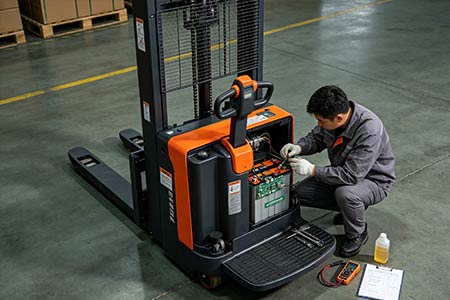
Quarterly maintenance (accumulated 500‑600 working hours) Quarterly deep maintenance is recommended with support from professional technicians. Retighten all fasteners across the truck. Measure chain elongation and replace over‑stretched chains to avoid breakage hazard.
Test single‑cell voltage and evaluate battery health status. Check lithium‑ion cell and BMS board; for lead‑acid battery, inspect electrolyte level. Verify all safety devices including limit switches, emergency stop and overload protection.
Measure mast roller wear and fork deformation. Sample hydraulic oil and perform oil change upon service interval. Complete no‑load and half‑load test after maintenance. Confirm dual‑fork synchronous lifting, travelling and braking work properly before putting back into production.
In short, standardized electric double‑pallet stacker maintenance effectively cuts failure rate, stabilizes inbound‑outbound efficiency for e‑commerce warehouses and brings long‑term value.
-
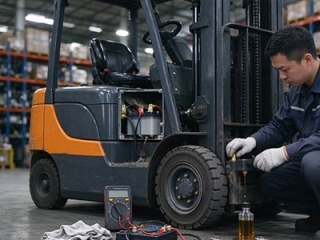 Reliability Of Newnewton Warehouse Forklifts For Heavy-Duty ShiftsWarehouse forklift reliability relies on industrial parts, reinforced frames and factory durability tests. Proper operation and maintenance reduce unexpected downtime.
Do you like ?0
Read more -
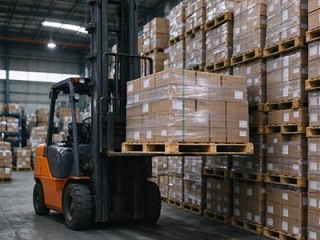 Forklift Configuration Strategy For Dense Warehousing, Warehouse ForkliftDense warehousing needs matched forklifts besides racks. Reach and trilateral stackers fit different layouts, coordinate aisle, load curve and floor for smooth handling.
Do you like ?0
Read more -
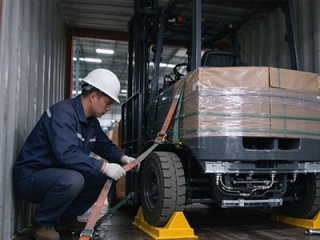 Full Container Supply For Export Forklifts, Forklift ManufacturerBulk forklift orders for overseas can ship by FCL or LCL. Newnewton FCL offers stable freight, safer packing and mixed models for large purchases.
Do you like ?0
Read more -
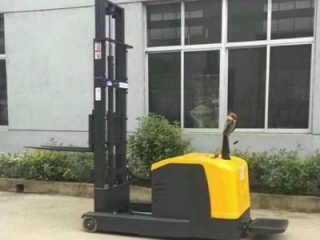 Stand-on Reach Stacker For Narrow Aisle Stacking, Mast Reach StructureStand-on reach stackers feature sliding masts that stay outside racks. They boost storage density in narrow aisles and require flat floors and standard pallets.
Do you like ?0
Read more -
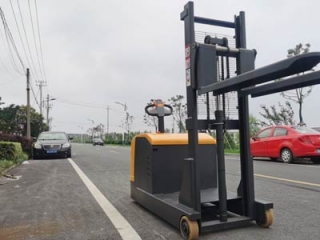 Stand-on Counterbalance Stacker For Various Pallets, Why No Leg RestrictionCounterbalance stackers have no front outriggers, using rear counterweight to avoid pallet interference. They fit various odd pallets yet need wider warehouse aisles.
Do you like ?0
Read more -
 Custom Walk-Behind Counterbalance Stacker | Non-Standard ModificationsStandard walk-behind counterbalance stackers struggle with non-standard pallets and tight aisles. Customize load, lift, forks and structure, share working conditions for safe design.
Do you like ?0
Read more