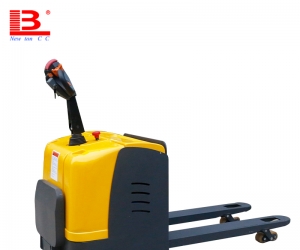
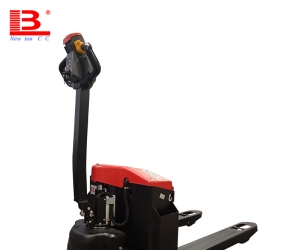
Straddle‑Leg Electric Stacker: Which Working Conditions Fit Best
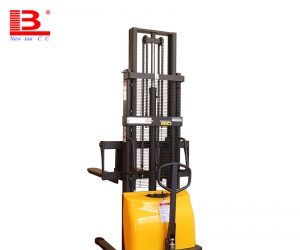
Many warehouses face the trouble that support legs get stuck under pallets after purchasing stackers. The walk‑behind straddle‑leg full‑electric stacker solves such problem. Below we sort out its applicable and non‑applicable working conditions to help you judge whether it fits your warehouse.
Suitable working conditions It is widely applied in small‑to‑medium‑sized flat warehouses and medium‑level racking storage. Adjustable straddle legs fit double‑sided pallets and some over‑hanging pallets, solving the stuck‑pallet issue of fixed‑leg stackers.
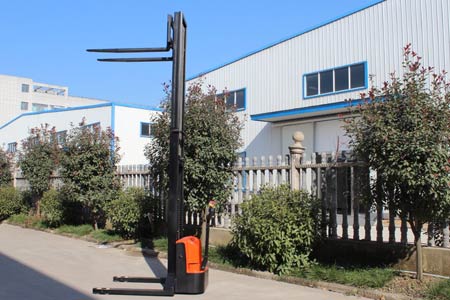
It performs well for raw material and finished‑goods stacking inside workshops. Compact body and flexible walk‑behind control allow operation inside elevators and aisles. It matches medium‑frequency tasks with dozens of stacking cycles per day, 1‑2 ton load capacity and 3‑4.5 m maximum lifting height.
For warehouses receiving mixed‑size incoming pallets from different suppliers, adjustable straddle legs realize multi‑pallet compatibility with one unit and reduce extra equipment investment.
Unsuitable working conditions It is not recommended for high‑level rack warehouses. Stability drops and load derating becomes obvious when lifting height exceeds 4.5 m, so it cannot handle frequent heavy‑load high‑bay stacking.
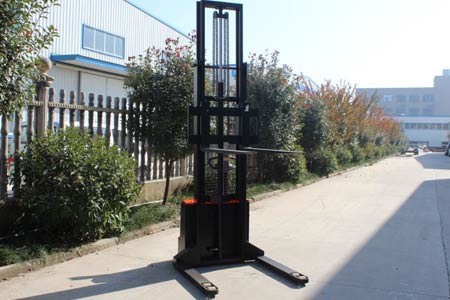
Avoid outdoor sites with potholed or gravel ground. Exposed wheels on straddle legs lead to shaking, fast roller wear and poor stacking accuracy. This model is designed for indoor cement or epoxy floor.
Continuous heavy‑duty high‑tonnage tasks are not suitable. Its light‑duty structure suffers accelerated component wear under full‑load non‑stop work. Rider‑operated or counterbalance stackers are better alternatives. It also cannot work with single‑sided closed pallets, whose base will block straddle legs from getting underneath.
Featuring long runtime and multi‑pallet compatibility, the walk‑behind straddle‑leg full‑electric stacker brings easy stacking for matched scenarios. Contact us to get free specifications for your project.
-
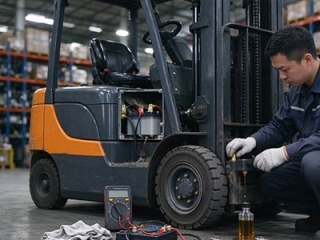 Reliability Of Newnewton Warehouse Forklifts For Heavy-Duty ShiftsWarehouse forklift reliability relies on industrial parts, reinforced frames and factory durability tests. Proper operation and maintenance reduce unexpected downtime.
Do you like ?0
Read more -
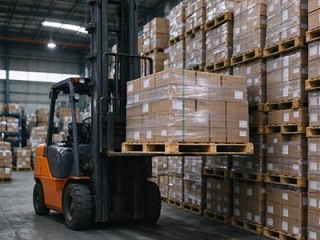 Forklift Configuration Strategy For Dense Warehousing, Warehouse ForkliftDense warehousing needs matched forklifts besides racks. Reach and trilateral stackers fit different layouts, coordinate aisle, load curve and floor for smooth handling.
Do you like ?0
Read more -
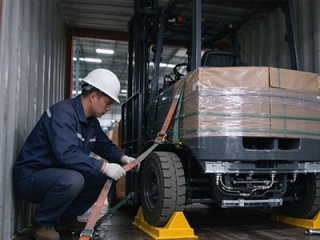 Full Container Supply For Export Forklifts, Forklift ManufacturerBulk forklift orders for overseas can ship by FCL or LCL. Newnewton FCL offers stable freight, safer packing and mixed models for large purchases.
Do you like ?0
Read more -
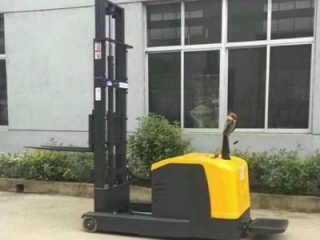 Stand-on Reach Stacker For Narrow Aisle Stacking, Mast Reach StructureStand-on reach stackers feature sliding masts that stay outside racks. They boost storage density in narrow aisles and require flat floors and standard pallets.
Do you like ?0
Read more -
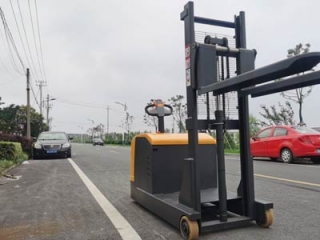 Stand-on Counterbalance Stacker For Various Pallets, Why No Leg RestrictionCounterbalance stackers have no front outriggers, using rear counterweight to avoid pallet interference. They fit various odd pallets yet need wider warehouse aisles.
Do you like ?0
Read more -
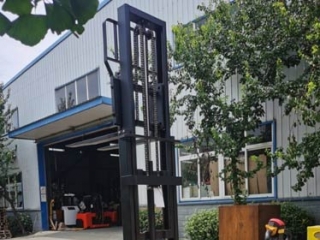 Custom Walk-Behind Counterbalance Stacker | Non-Standard ModificationsStandard walk-behind counterbalance stackers struggle with non-standard pallets and tight aisles. Customize load, lift, forks and structure, share working conditions for safe design.
Do you like ?0
Read more