What is the difference between DC motor and AC motor of electric forklift?
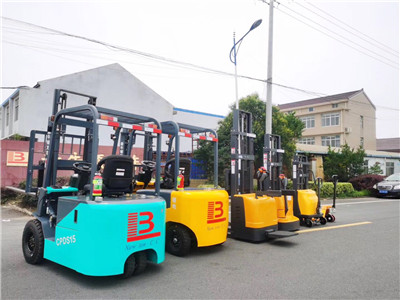
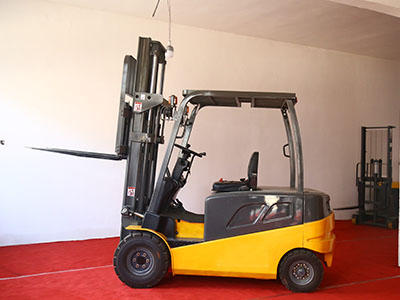
In recent years, as labor costs continue to rise and work efficiency requirements increase, more and more factories will use electric forklifts to replace the original manual forklifts. The power system of electric forklifts will use drive motors, and the drive motors of electric forklifts Usually there are DC motors and AC motors, so what is the difference between them?
The DC motor of an electric forklift uses DC power as a power source, while the AC motor of a forklift uses AC power as a power source. From the structural point of view, the principle of the forklift electric DC motor is relatively simple, but the structure is more complicated, which is not conducive to the later maintenance of the electric forklift motor. Although the principle of the AC motor of the forklift is more complicated, the structure is relatively simple, so it is easier to maintain than the DC motor.
The DC motor of an electric forklift introduces current into the rotor armature through brushes and commutators, so that the rotor is forced to rotate in the stator magnetic field. The structure of the DC motor of an electric forklift should be composed of two parts: the stator and the rotor. The static part of the DC motor of an electric forklift is called the stator. The main function of the stator is to generate a magnetic field. It is composed of a base, a main magnetic pole, a commutating pole, an end cover, a bearing and a brush device. The rotating part of the electric forklift motor is called the rotor. Its main function is to generate electromagnetic torque and induced electromotive force. It is the hub of the DC motor for energy conversion, so it is usually called the armature. It consists of pivot winding, commutator and fan.

The AC motor of an electric forklift passes alternating current into the stator windings to generate a rotating magnetic field in the stator and rotor air gaps. The rotating magnetic field induces current in the rotor windings, which in turn causes the rotor to rotate in the stator magnetic field. AC motor: It is a machine used to realize the mutual conversion of mechanical energy and AC electrical energy. Due to the great development of AC power systems, AC motors have become the most commonly used motors for electric forklifts. Compared with DC motors, AC motors have no commutator, so they are simple in structure, convenient to manufacture, firmer, and easy to be made into motors with high speed, high voltage, large current, and large capacity.
In practical applications, their specific differences are as follows:
Speed regulation: DC motor speed regulation is simple, but the application occasions are limited. AC motor speed regulation is relatively complicated, but it is widely used due to the use of AC power.
Noise: Because the DC motor of the electric forklift has brushes and commutators, the noise of the electric forklift is slightly louder when it is working.
Operation and maintenance: The brushes and commutator of the DC motor of the electric forklift are worn out, so they need to be replaced frequently; the AC motor has no brushes and commutator, and maintenance is relatively convenient. In the long run, the maintenance cost of electric forklifts is also lower for AC motors, so AC motors are increasingly used by electric forklifts.
-
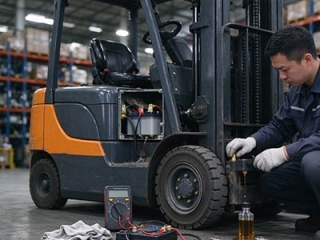 Reliability Of Newnewton Warehouse Forklifts For Heavy-Duty ShiftsWarehouse forklift reliability relies on industrial parts, reinforced frames and factory durability tests. Proper operation and maintenance reduce unexpected downtime.
Do you like ?0
Read more -
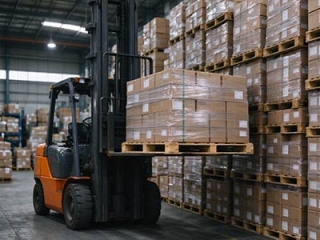 Forklift Configuration Strategy For Dense Warehousing, Warehouse ForkliftDense warehousing needs matched forklifts besides racks. Reach and trilateral stackers fit different layouts, coordinate aisle, load curve and floor for smooth handling.
Do you like ?0
Read more -
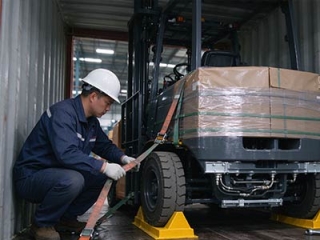 Full Container Supply For Export Forklifts, Forklift ManufacturerBulk forklift orders for overseas can ship by FCL or LCL. Newnewton FCL offers stable freight, safer packing and mixed models for large purchases.
Do you like ?0
Read more -
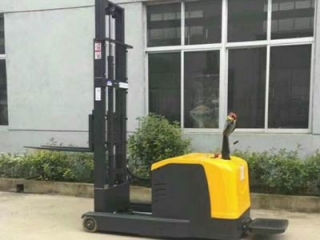 Stand-on Reach Stacker For Narrow Aisle Stacking, Mast Reach StructureStand-on reach stackers feature sliding masts that stay outside racks. They boost storage density in narrow aisles and require flat floors and standard pallets.
Do you like ?0
Read more -
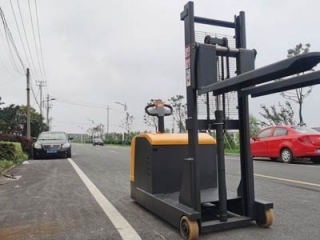 Stand-on Counterbalance Stacker For Various Pallets, Why No Leg RestrictionCounterbalance stackers have no front outriggers, using rear counterweight to avoid pallet interference. They fit various odd pallets yet need wider warehouse aisles.
Do you like ?0
Read more -
 Custom Walk-Behind Counterbalance Stacker | Non-Standard ModificationsStandard walk-behind counterbalance stackers struggle with non-standard pallets and tight aisles. Customize load, lift, forks and structure, share working conditions for safe design.
Do you like ?0
Read more