What inspections should be carried out before operating a semi-electric stacker?

In addition to regular inspections of semi electric stacker, there should be a habitual safety inspection before operation and use.
First, the driver is in position and fasten his seat belt. Press the horn to confirm that there is no problem; check the power display to ensure that the power is sufficient; push the fork lift lever to check whether the fork lift is normal; check the service brake system, and work only when the brake is intact.
Braking detection is the most important of the above routine inspections before driving. The main points of braking detection are:
1. When the operating lever is moved up to the highest position or down to the lowest position, the stacker is prohibited from walking to avoid tipping.
2. When the direction switch is turned to the reverse position during normal operation, the electric brake function can be performed. Controlling the running speed can control the power of the motor.
Forklift steering detection: it detects whether the forklift's transition angle is sensitive when steering. Whether it can be turned at any position within the range of 90° in the left and right directions.
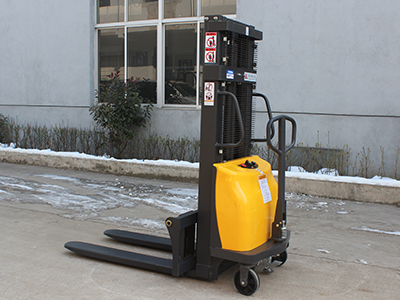
The above is the pre-operation inspection, so what are the standard behaviors after using the forklift?
Generally, electric forklift manufacturers will advise customers to stop after use as follows:
Press the fork down lever to lower the fork down to the lowest position so that there is no system pressure in the hydraulic system; loosen the operating arm, the operating arm will automatically return to the parking brake position, and turn the key switch to OFF.
Pay attention to the power display of the electric stacker during use to prevent the stacker's power from being too low due to overuse. Generally, the semi-electric stacker can be charged when the remaining 20% of the battery is used.
After get off work, the stacker should be inspected again to confirm that there is no problem and will not affect the next use. After the inspection, the semi-electric stacker should be parked at the fixed equipment location and the body should be kept clean.
-
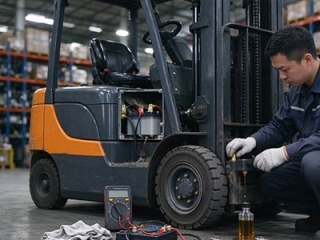 Reliability Of Newnewton Warehouse Forklifts For Heavy-Duty ShiftsWarehouse forklift reliability relies on industrial parts, reinforced frames and factory durability tests. Proper operation and maintenance reduce unexpected downtime.
Do you like ?0
Read more -
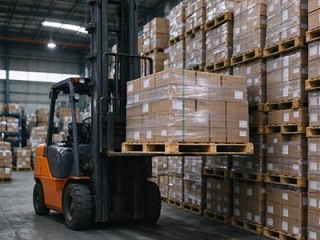 Forklift Configuration Strategy For Dense Warehousing, Warehouse ForkliftDense warehousing needs matched forklifts besides racks. Reach and trilateral stackers fit different layouts, coordinate aisle, load curve and floor for smooth handling.
Do you like ?0
Read more -
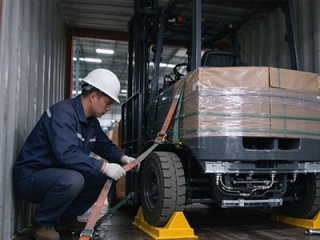 Full Container Supply For Export Forklifts, Forklift ManufacturerBulk forklift orders for overseas can ship by FCL or LCL. Newnewton FCL offers stable freight, safer packing and mixed models for large purchases.
Do you like ?0
Read more -
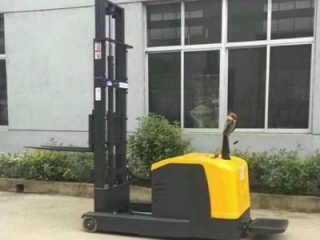 Stand-on Reach Stacker For Narrow Aisle Stacking, Mast Reach StructureStand-on reach stackers feature sliding masts that stay outside racks. They boost storage density in narrow aisles and require flat floors and standard pallets.
Do you like ?0
Read more -
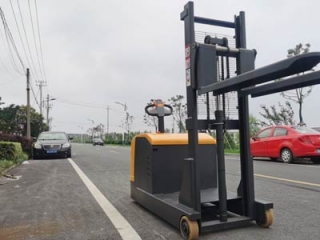 Stand-on Counterbalance Stacker For Various Pallets, Why No Leg RestrictionCounterbalance stackers have no front outriggers, using rear counterweight to avoid pallet interference. They fit various odd pallets yet need wider warehouse aisles.
Do you like ?0
Read more -
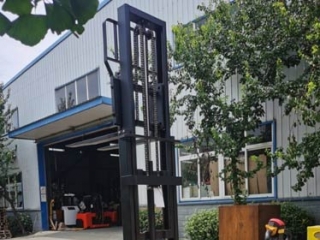 Custom Walk-Behind Counterbalance Stacker | Non-Standard ModificationsStandard walk-behind counterbalance stackers struggle with non-standard pallets and tight aisles. Customize load, lift, forks and structure, share working conditions for safe design.
Do you like ?0
Read more