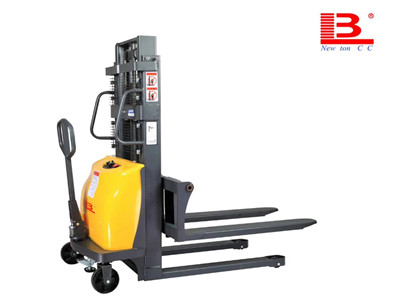
Why do you need to add distilled water to the semi-electric stacker battery?

When buying a semi electric stacker, electric forklift manufacturers will remind the forklift battery to add water for a certain period of time, but tap water or purified water cannot be added to the forklift battery. Distilled water must be used. Why?
During the charging and discharging process of the semi electric stacker, due to the electrolysis and evaporation of the battery of the semi electric stacker, the water in the electrolyte will gradually decrease, thereby causing the electrolyte level to drop. If it is not replenished in time, it may shorten the service life of the battery of the semi electric stacker. The water added in the battery of the semi electric stacker should be distilled water, and should not be replaced with pure drinking water. Because the purified water contains a variety of trace elements, it will have an adverse effect on the battery of the semi electric stacker.
Ordinary batteries used in semi electric stacker should be replenished with water once a month, and other types of batteries should be supplemented with distilled water on a regular basis depending on the water consumption. For semi electric stacker batteries that are not in use temporarily, the replenishment of water can be delayed for several months.
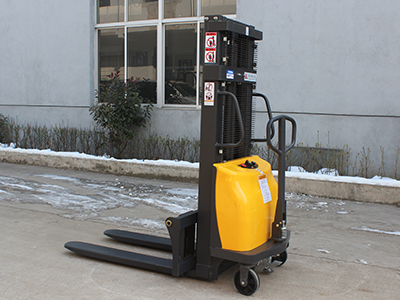
After replenishing the battery of the semi electric stacker, the battery should be supplemented in an appropriate amount. If the battery of some semi electric stacker has a rapid drop in liquid level and frequent water replenishment, check whether the limit voltage of the semi electric stacker regulator is adjusted too high. Too high will cause overcharging, high water consumption, and fast evaporation. This situation can be solved by adjusting the limit voltage of the semi electric stacker. If some batteries drop quickly, check for short circuits. In addition, it depends on whether there are cracks in the battery tank of the semi electric stacker, and whether the electrolyte is leaking, and it must be handled according to the actual situation.
-
 Reliability Of Newnewton Warehouse Forklifts For Heavy-Duty ShiftsWarehouse forklift reliability relies on industrial parts, reinforced frames and factory durability tests. Proper operation and maintenance reduce unexpected downtime.
Do you like ?0
Read more -
 Forklift Configuration Strategy For Dense Warehousing, Warehouse ForkliftDense warehousing needs matched forklifts besides racks. Reach and trilateral stackers fit different layouts, coordinate aisle, load curve and floor for smooth handling.
Do you like ?0
Read more -
 Full Container Supply For Export Forklifts, Forklift ManufacturerBulk forklift orders for overseas can ship by FCL or LCL. Newnewton FCL offers stable freight, safer packing and mixed models for large purchases.
Do you like ?0
Read more -
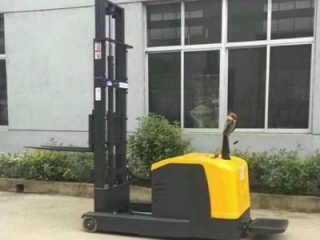 Stand-on Reach Stacker For Narrow Aisle Stacking, Mast Reach StructureStand-on reach stackers feature sliding masts that stay outside racks. They boost storage density in narrow aisles and require flat floors and standard pallets.
Do you like ?0
Read more -
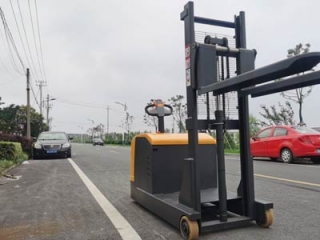 Stand-on Counterbalance Stacker For Various Pallets, Why No Leg RestrictionCounterbalance stackers have no front outriggers, using rear counterweight to avoid pallet interference. They fit various odd pallets yet need wider warehouse aisles.
Do you like ?0
Read more -
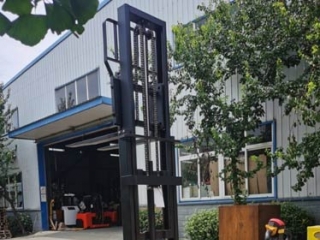 Custom Walk-Behind Counterbalance Stacker | Non-Standard ModificationsStandard walk-behind counterbalance stackers struggle with non-standard pallets and tight aisles. Customize load, lift, forks and structure, share working conditions for safe design.
Do you like ?0
Read more