
Plans to deploy unmanned AGV forklift in warehouses involve multiple considerations. Apart from direct procurement expense, various hidden costs during project implementation should be evaluated, otherwise you will face obvious budget deviation. Below are four easily‑overlooked cost items for your reference.
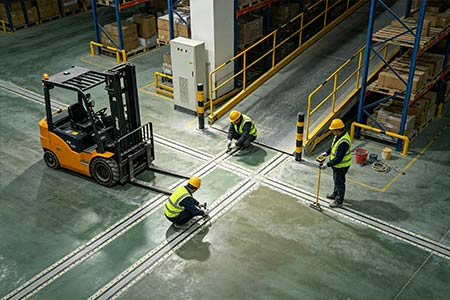
On‑site environment reconstruction cost Many existing workshops are not originally designed for automated equipment, so they cannot satisfy AGV operating conditions right after delivery. Poor floor flatness and friction coefficient will call for floor grinding or epoxy floor renovation. Guardrails and anti‑collision bollards shall be installed at aisle intersections.
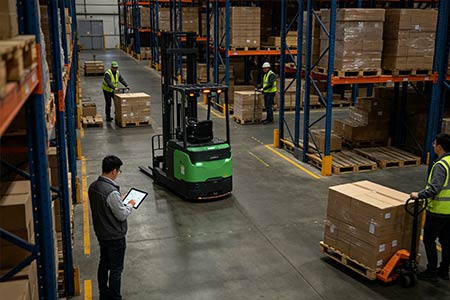
Magnetic tape or magnetic nails need laying for magnetic‑navigation models, bringing material and construction labor cost. Ramps are required where steps and height differences exist at aisle entrances. Such reconstruction fees are usually excluded from equipment quotation and easy to be ignored.
Software system integration and development cost An AGV forklift is merely hardware. To realize full automation value, it often needs connection with existing factory systems such as WMS, MES and ERP. Direct connection is available for standard protocols, while customized interface development is required for old non‑standard systems.
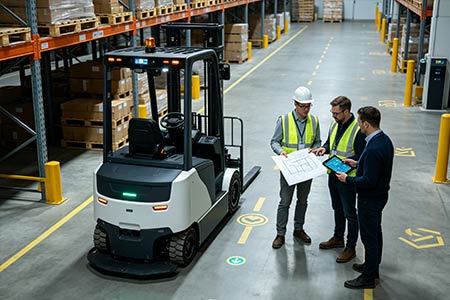
Expenses come from secondary interface development, commissioning and staff training. For multi‑unit AGV cluster operation, costs are generated by dispatching system authorization and site map debugging. Do not take these items as free accessories included in device offer.
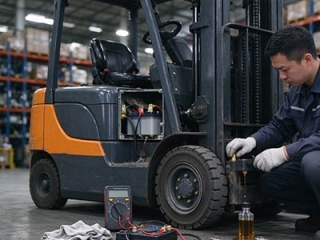
Long‑term maintenance and spare‑part wear cost AGV belongs to mechatronic intelligent equipment. Sensors, laser scanners, anti‑collision detectors, batteries and drive wheels are high‑frequency wearing parts. If you only focus on unit price at purchasing stage, later expenditure on radar replacement, laser lens and wheel components will greatly influence long‑term spending.
Manpower for maintenance should also be counted, including staff for map update, fault diagnosis and task adjustment. Outsourced on‑site support generates travel and working‑hour service fees. Maintenance expenditure accumulates year by year with multiple‑device running.
Downtime commissioning and staff transition cost AGV projects cannot reach full production immediately upon delivery. On‑site mapping, waypoint debugging, workflow simulation and mode switching will occupy production time and cause short‑term efficiency fluctuation.
Original material‑handling workers need operation training and post rearrangement. Dual‑labor investment occurs during transition period when manual work and automated robots run simultaneously. Such time cost is frequently omitted in enterprise budget planning.
To calculate real expenditure and payback period of AGV intelligent handling robot, take all above factors into account. Feel free to contact us for further consultation.
-
 Reliability Of Newnewton Warehouse Forklifts For Heavy-Duty ShiftsWarehouse forklift reliability relies on industrial parts, reinforced frames and factory durability tests. Proper operation and maintenance reduce unexpected downtime.
Do you like ?0
Read more -
 Forklift Configuration Strategy For Dense Warehousing, Warehouse ForkliftDense warehousing needs matched forklifts besides racks. Reach and trilateral stackers fit different layouts, coordinate aisle, load curve and floor for smooth handling.
Do you like ?0
Read more -
 Full Container Supply For Export Forklifts, Forklift ManufacturerBulk forklift orders for overseas can ship by FCL or LCL. Newnewton FCL offers stable freight, safer packing and mixed models for large purchases.
Do you like ?0
Read more -
 Stand-on Reach Stacker For Narrow Aisle Stacking, Mast Reach StructureStand-on reach stackers feature sliding masts that stay outside racks. They boost storage density in narrow aisles and require flat floors and standard pallets.
Do you like ?0
Read more -
 Stand-on Counterbalance Stacker For Various Pallets, Why No Leg RestrictionCounterbalance stackers have no front outriggers, using rear counterweight to avoid pallet interference. They fit various odd pallets yet need wider warehouse aisles.
Do you like ?0
Read more -
 Custom Walk-Behind Counterbalance Stacker | Non-Standard ModificationsStandard walk-behind counterbalance stackers struggle with non-standard pallets and tight aisles. Customize load, lift, forks and structure, share working conditions for safe design.
Do you like ?0
Read more








