
Does your internal combustion diesel forklift suffer from power loss? The oil filter replacement specification for fuel forklifts must be strictly followed. When internal combustion diesel forklifts work frequently in factories and construction sites, the oil filter acts as a key barrier for the lubrication system. Once clogged, its filtration performance drops, and impurities enter the engine, gradually causing power reduction, higher fuel consumption, and even cylinder scuffing in severe cases. Many maintenance workers only replace engine oil while ignoring the timing and operation details of filter replacement, which creates hidden risks of engine failure.
Replacement cycles vary based on working conditions. For single-shift operation in clean indoor warehouses, replace the oil filter every 200 working hours as the standard maintenance schedule. For harsh environments with heavy dust, gravel yards and open-air construction sites, shorten the interval to 100–150 hours. Do not wait until the filter is fully blocked. Once the bypass valve opens, unfiltered oil flows directly into the oil circuit and loses protection.
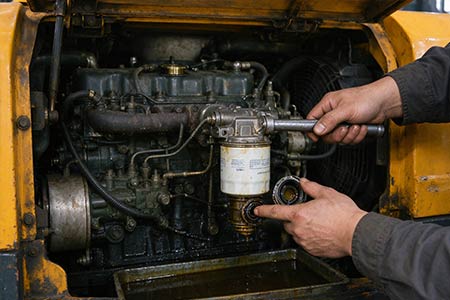
Follow the standard replacement procedure. Shut down the forklift and wait for the engine to cool fully to prevent scalding from hot oil. Place an oil collection container underneath, loosen the drain plug to discharge old oil, then remove the old oil filter with a special tool. Clean residual rubber seal on the filter base and make sure the old seal is not stuck on it. Coat the rubber seal of the new filter evenly with engine oil, screw it on by hand, and turn it an extra 3/4 turn after seating. Do not over-tighten it with tools, or the seal will be squeezed and leak oil.
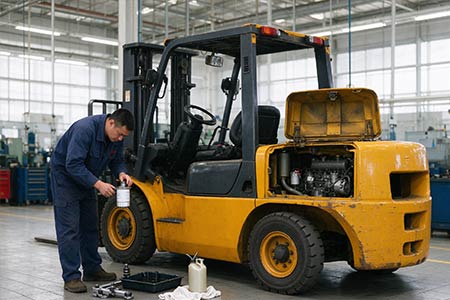
Check the oil level. Fill oil to the marked range on the dipstick. Start the engine and run it at idle for several minutes, then check for oil leakage at the filter and connection points. Stop the engine and wait for a while, then recheck the oil level. Used oil filters are hazardous waste and need centralized recycling instead of random disposal.
During daily inspection, watch the oil pressure warning light. Abnormal pressure usually indicates a clogged filter or oil circuit fault. Follow the oil filter replacement specification for fuel forklifts to extend forklift service life.
FAQ
Q: Can I change engine oil without replacing the filter?
A: No. The old filter is full of impurities and will contaminate new oil, making the maintenance useless.
Q: Can oil filters from different brands be mixed?
A: Thread size and sealing dimension must match. Mismatched specs cause poor sealing and insufficient oil supply.
Q: Is tighter always better for filter installation?
A: No. Excessive force may strip threads or deform the seal. Tighten according to standard torque.
-
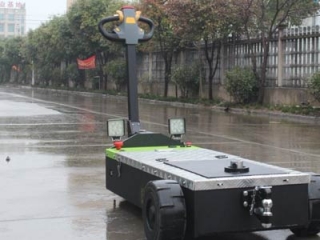 How to Locate and Fix Steering Noise on Electric Towing TractorsElectric tow tractors often have recurring steering noise. Different sounds indicate different damaged parts. Locate faults and maintain properly to avoid repeated issues.
Do you like ?0
Read more -
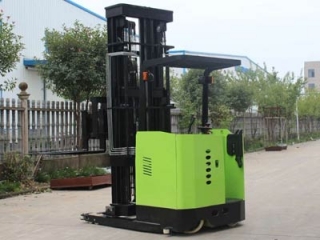 Cut Warehouse Aisle Width With 3-Way Electric Stacker for Dense StorageThree-way forklifts rotate forks for side picking without turning. They cut aisle space to 1.6–1.8m and add storage slots for indoor warehouses.
Do you like ?0
Read more -
 Customized Truck Mounted Forklifts for Limited Truck SpaceElectric self-loading stackers for trunk delivery can be custom-sized to fit truck beds. Core safety parameters like load and counterweight cannot be changed freely.
Do you like ?0
Read more -
 How Does Dual Pallet Electric Stacker Realize Synchronized Fork LiftingElectric double pallet stackers use flow dividers and linkages for synchronized fork lift. Uneven side loads cause height gaps; standard forks move together without separate control.
Do you like ?0
Read more -
 4 Warehouse Scenarios Where Stand-on Reach Stackers ShineStand-on reach stackers reduce stacking aisles for warehouse expansion. Great for high-rack, renovated, transit and double-deep storage scenarios.
Do you like ?0
Read more -
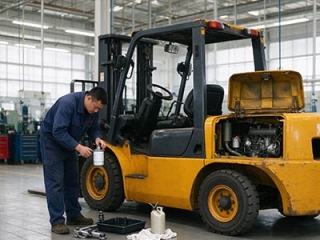 How to Replace Oil Filter for Fuel Diesel Forklift CorrectlyOil filters of diesel forklifts trap impurities. Clogged filters cause power loss and engine damage. Follow working conditions to set replacement cycles.
Do you like ?0
Read more








