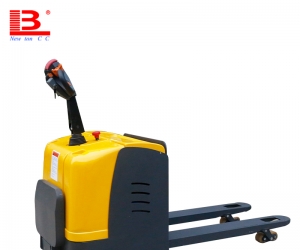
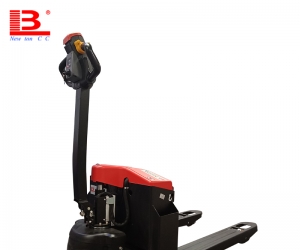
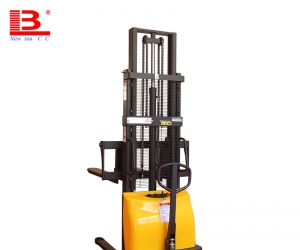
When renovating racking or expanding storage capacity, many warehouse managers look for equipment that balances narrow aisle requirements and high stacking performance. With extendable forks, the stand-on reach electric stacker handles high-level pallet access without full vehicle turning. Four types of warehouses should prioritize this model.
High-level beam rack warehouses. Racks usually exceed 6 meters for full pallet storage, and available space cannot support wide turning aisles. The reach structure shrinks stacking aisle width. Compared with standard counterbalance stackers, more rack positions fit in the same floor area, ideal for bulk raw material and finished goods pallet storage.
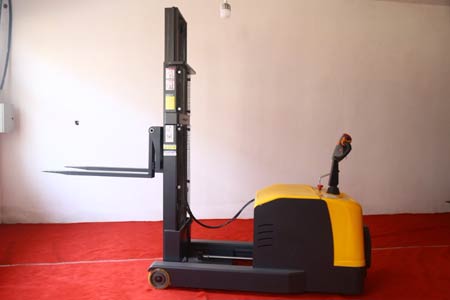
Renovated older warehouses. Existing racks are fixed and cannot be dismantled or rearranged, with fixed narrow aisles that leave no room for ordinary stackers to turn. Instead of expensive infrastructure changes, deploying stand-on reach stacker unlocks higher stacking capacity within the original aisle layout and cuts renovation costs.
Two-shift high-throughput transit warehouses. The stand-on design reduces operator fatigue compared to walk-behind units. It maintains steady inbound, outbound and restocking cycles for high-volume turnover, such as auto parts and packaging material warehouses, delivering reliable efficiency during long shifts.
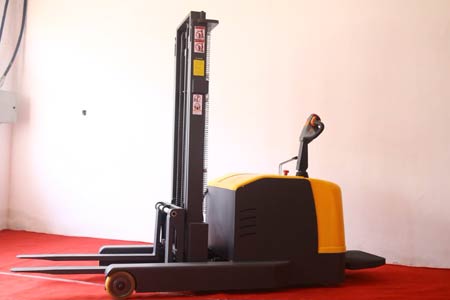
Double-deep rack warehouses. Double-deep racking requires forks to reach the second storage position, a task regular stackers cannot complete. The extendable mast of the stand-on reach stacker perfectly matches this setup and maximizes the storage advantage of double-deep racks.
You need to know the suitable warehouse conditions for stand-on reach stacker, as it also has limitations. It demands flat flooring; uneven ground hurts stability during high stacking. Its longer body makes it poor value for open warehouses used only for horizontal pallet transfer. Verify clear aisle width, rack height and floor condition before finalizing your choice.
Feel free to reach out if you have questions.
-
 How to Locate and Fix Steering Noise on Electric Towing TractorsElectric tow tractors often have recurring steering noise. Different sounds indicate different damaged parts. Locate faults and maintain properly to avoid repeated issues.
Do you like ?0
Read more -
 Cut Warehouse Aisle Width With 3-Way Electric Stacker for Dense StorageThree-way forklifts rotate forks for side picking without turning. They cut aisle space to 1.6–1.8m and add storage slots for indoor warehouses.
Do you like ?0
Read more -
 Customized Truck Mounted Forklifts for Limited Truck SpaceElectric self-loading stackers for trunk delivery can be custom-sized to fit truck beds. Core safety parameters like load and counterweight cannot be changed freely.
Do you like ?0
Read more -
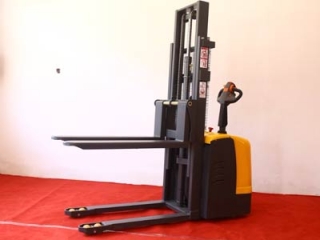 How Does Dual Pallet Electric Stacker Realize Synchronized Fork LiftingElectric double pallet stackers use flow dividers and linkages for synchronized fork lift. Uneven side loads cause height gaps; standard forks move together without separate control.
Do you like ?0
Read more -
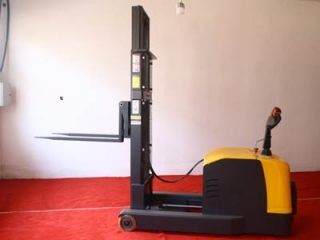 4 Warehouse Scenarios Where Stand-on Reach Stackers ShineStand-on reach stackers reduce stacking aisles for warehouse expansion. Great for high-rack, renovated, transit and double-deep storage scenarios.
Do you like ?0
Read more -
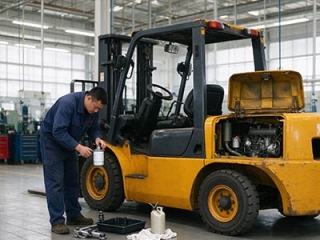 How to Replace Oil Filter for Fuel Diesel Forklift CorrectlyOil filters of diesel forklifts trap impurities. Clogged filters cause power loss and engine damage. Follow working conditions to set replacement cycles.
Do you like ?0
Read more