
How Does Dual Pallet Electric Stacker Realize Synchronized Fork Lifting
The working principle of electric dual pallet stacker enables it to stack two pallets in one run. Instead of simply adding two separate fork sets, it adopts synchronous hydraulic circuits and mechanical linkages to keep both forks moving at the same pace and prevent cargo tilting caused by uneven height.
Two side-by-side fork assemblies share one main hydraulic pump station. A flow divider valve is fitted in the oil circuit to distribute hydraulic oil evenly to the lifting cylinders on both sides. When the operator sends lifting commands via the control handle, the divider balances the oil volume entering each cylinder. The two masts go up or down synchronously, keeping both pallets level.
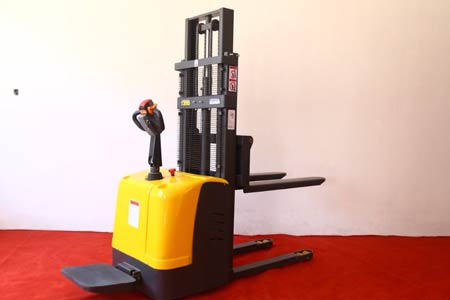
Without this flow dividing structure, different loads on the two cylinders will lead to obvious speed differences, tilted pallets and falling goods.
It uses a single drive system, similar to ordinary stand-on stackers. Operators stand on the rear platform to control travel and steering. The chassis steering mechanism completes vehicle turning. The difference lies in its extended and widened frame with adjusted counterweight, which offsets extra load from double pallets and keeps stable center of gravity under full load.
For operation, two standard pallets of the same size are placed on the two forks. Even with the synchronous valve, slight height difference may occur if the two pallets have a huge weight gap, which is normal. Operation rules require balanced load on both sides.
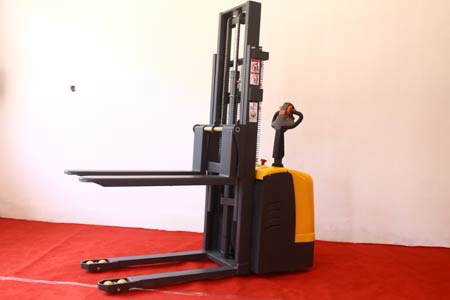
Many buyers mistakenly think each fork can be controlled independently. Standard stand-on dual pallet stacker links the two forks together without separate adjustment. Independent control is an optional customization with extra separate control valves.
The stand-on dual pallet stacker suits high-volume inbound and outbound tasks for identical goods. It doubles throughput per cycle, yet its longer body needs wider stacking aisles, so it is not ideal for old narrow-aisle warehouses. Besides understanding the synchronous lifting principle, calculate aisle size and floor load capacity before selection to match bulk transfer demands.
-
 How to Locate and Fix Steering Noise on Electric Towing TractorsElectric tow tractors often have recurring steering noise. Different sounds indicate different damaged parts. Locate faults and maintain properly to avoid repeated issues.
Do you like ?0
Read more -
 Cut Warehouse Aisle Width With 3-Way Electric Stacker for Dense StorageThree-way forklifts rotate forks for side picking without turning. They cut aisle space to 1.6–1.8m and add storage slots for indoor warehouses.
Do you like ?0
Read more -
 Customized Truck Mounted Forklifts for Limited Truck SpaceElectric self-loading stackers for trunk delivery can be custom-sized to fit truck beds. Core safety parameters like load and counterweight cannot be changed freely.
Do you like ?0
Read more -
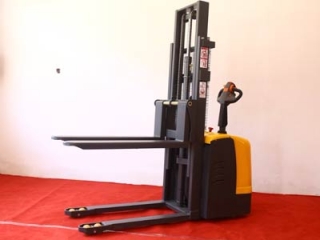 How Does Dual Pallet Electric Stacker Realize Synchronized Fork LiftingElectric double pallet stackers use flow dividers and linkages for synchronized fork lift. Uneven side loads cause height gaps; standard forks move together without separate control.
Do you like ?0
Read more -
 4 Warehouse Scenarios Where Stand-on Reach Stackers ShineStand-on reach stackers reduce stacking aisles for warehouse expansion. Great for high-rack, renovated, transit and double-deep storage scenarios.
Do you like ?0
Read more -
 How to Replace Oil Filter for Fuel Diesel Forklift CorrectlyOil filters of diesel forklifts trap impurities. Clogged filters cause power loss and engine damage. Follow working conditions to set replacement cycles.
Do you like ?0
Read more








