
Comparison of Diesel and Electric Forklifts for Warehouse Selection
Warehouse buyers often struggle to pick between diesel and electric forklifts for warehouse selection. These two types of forklifts have obvious differences, and you can avoid wrong selection by comparing their features and matching your working conditions.
Working site and environment requirements The internal combustion forklift runs on fuel with no battery range limit. It works well on outdoor construction sites, gravel yards and open stockyards, and starts stably in low-temperature environments. However, it produces exhaust gas and high noise, so it is not suitable for enclosed indoor warehouses, food workshops and pharmaceutical storage with strict environmental standards.
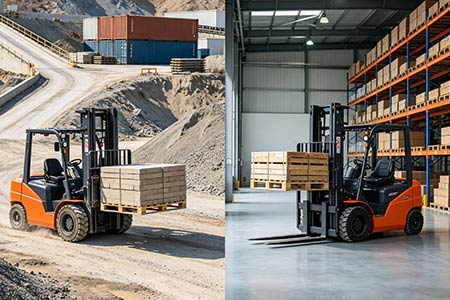
Electric forklifts are powered by batteries, with zero exhaust emission and low running noise. They are mainly used for indoor warehouse stacking, and flat cement or epoxy floors are preferred.
Continuous operation and battery endurance It only takes a few minutes to refuel an internal combustion forklift. It suits 2-shift or 3-shift heavy-duty nonstop work without shutdown caused by power depletion.
The working hours of electric forklifts are limited by battery capacity. Lithium battery models support quick battery swapping, while lead-acid batteries need long charging time. They fit warehouses with moderate daily working hours and available charging space.
Operating cost comparison The purchase price of the internal combustion forklift is relatively low. But long-time operation brings high expenditure on diesel, engine oil and filter replacement.
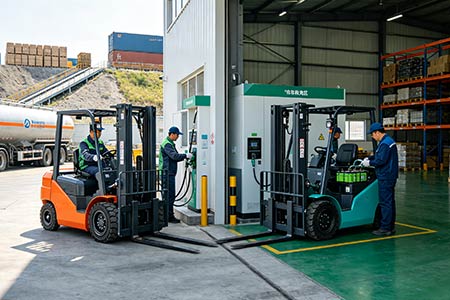
Electric forklifts require higher upfront investment. Yet electricity cost is much lower than diesel. The motor structure is simple with fewer wearing parts and less routine maintenance, which saves operating expenses for long-term frequent use.
Load capacity and working condition matching Internal combustion forklifts deliver stronger power and better climbing performance for heavy loads. They perform better on ramps and uneven ground.
There are abundant medium and small tonnage electric forklifts for indoor pallet handling and stacking. Large-tonnage electric forklifts are increasingly popular, yet they cost more than internal combustion models with the same load capacity.
Based on the four dimensions, choose the internal combustion forklift for outdoor, continuous heavy-duty and multi-shift work. Pick electric forklifts for enclosed indoor warehouses with strict limits on noise and exhaust, and long-term light or medium load tasks. If you want to know more specifications and quotations of diesel and electric forklifts for warehouse selection, please contact us.
-
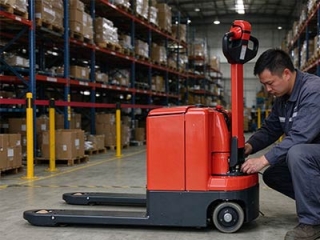 Maintenance Notes for Double Pallet Truck Under Heavy Warehouse LoadsOperators often ignore abnormal motor noise of double pallet trucks during rush orders. Continuous operation burns motors. Timely maintenance prevents failures.
Do you like ?0
Read more -
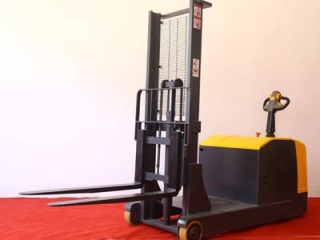 How to Get Accurate Quotations for Stand-on Counterbalance StackerStand-on counterbalance stackers rely on rear weight for stability and cost more. Battery, load, lift height and custom options affect final quotations.
Do you like ?0
Read more -
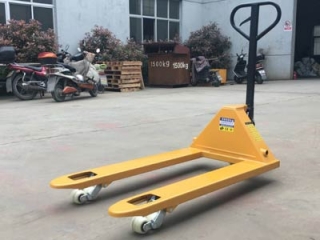 Manual Stacker Vs Pallet Jack: Key Operational Function DifferencesNew buyers confuse manual pallet trucks and manual stackers. They differ in lifting function. Pallet trucks for transfer, stackers for racking to avoid risks.
Do you like ?0
Read more -
 Custom Forklift Dimensions for Export to Fit Narrow Warehouse AislesForklift export faces size risks. Overseas orders may fail door, container or aisle fit. Customization needs balance of gravity, load and target market certifications.
Do you like ?0
Read more -
 Forklift Safety Management Guide Based on Special Equipment SpecificationsForklifts are special equipment. Follow TSG 81 with training, records, inspection and on-site control to prevent accidents and penalties.
Do you like ?0
Read more -
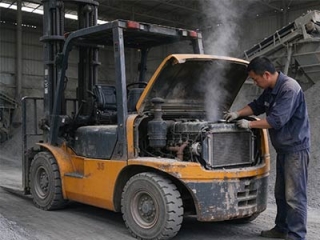 Heavy-Duty Diesel Forklift High Temperature Troubleshooting Guide3.5t diesel forklifts often overheat when handling sand and stone. Inspect cooling system step by step: radiator, belt, shroud, thermostat and water pump.
Do you like ?0
Read more








