
How to Select Attachment Specs for Heavy Duty Diesel Forklifts
Many buyers only refer to the rated tonnage of heavy duty diesel forklift and ignore the changed load center after installing forklift attachments, which brings overload risks. You should select attachment specifications according to cargo, working conditions and basic forklift parameters.
Confirm the load center distance of the forklift. Every heavy duty internal combustion forklift has a standard marked load center. Different attachments will change the stress position of forks. When the load center becomes larger, the actual load capacity drops. For example, bale clamps and paper roll clamps occupy extra space and push the load center outward. Even a 10-ton forklift cannot carry cargo according to its original rated capacity after fitting these attachments.
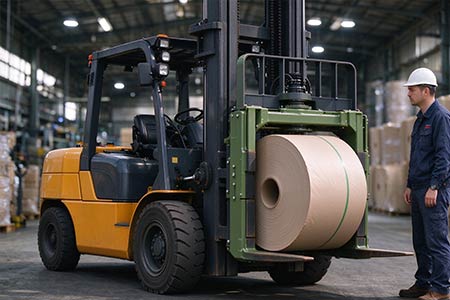
Select attachment types and dimensions based on cargo shapes. Paper rolls suit paper roll clamps or tire clamps, irregular bulk goods use bale clamps, and side shifters help fine adjust positions. The opening range and clamping width of attachments must exceed cargo dimensions with reasonable adjustment margin. If the cargo is extra long, check the frame width of attachments to prevent slipping and falling.
Check hydraulic oil circuit and mounting interface parameters. The hydraulic flow and pressure of the large ton diesel forklift must match the working demand of attachments. Insufficient flow causes slow movement, while inadequate pressure leads to weak clamping force. The hanger and pin shaft size need to fit the forklift mast. Some attachments require extra hydraulic pipelines and control valves due to different mounting holes from different brands.
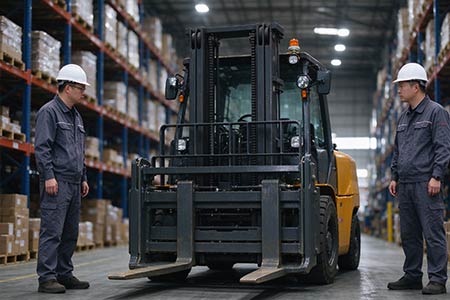
Consider working aisle and operator vision. Wider attachments increase the overall outer width of the truck. Confirm whether factory and warehouse aisles support turning. Clamp attachments may block front vision, and auxiliary rearview mirrors are recommended. Make sure attachments are equipped with safety pressure relief and pressure regulating devices to avoid cargo damage or pressure overload.
Recalculate the forklift load curve after attachment selection. Mark the updated safe load weight on the nameplate, and operators must follow the new load limit. If you need support on heavy duty diesel forklift and supporting attachment specification selection, contact our professional team for consultation.
-
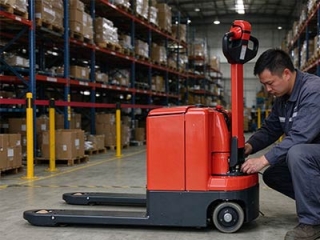 Maintenance Notes for Double Pallet Truck Under Heavy Warehouse LoadsOperators often ignore abnormal motor noise of double pallet trucks during rush orders. Continuous operation burns motors. Timely maintenance prevents failures.
Do you like ?0
Read more -
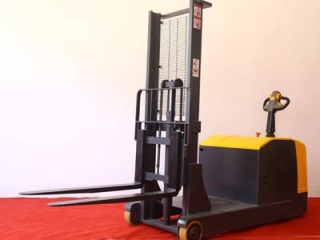 How to Get Accurate Quotations for Stand-on Counterbalance StackerStand-on counterbalance stackers rely on rear weight for stability and cost more. Battery, load, lift height and custom options affect final quotations.
Do you like ?0
Read more -
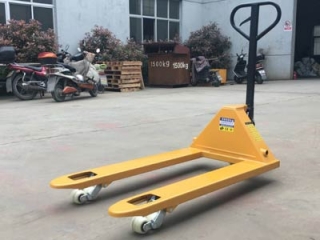 Manual Stacker Vs Pallet Jack: Key Operational Function DifferencesNew buyers confuse manual pallet trucks and manual stackers. They differ in lifting function. Pallet trucks for transfer, stackers for racking to avoid risks.
Do you like ?0
Read more -
 Custom Forklift Dimensions for Export to Fit Narrow Warehouse AislesForklift export faces size risks. Overseas orders may fail door, container or aisle fit. Customization needs balance of gravity, load and target market certifications.
Do you like ?0
Read more -
 Forklift Safety Management Guide Based on Special Equipment SpecificationsForklifts are special equipment. Follow TSG 81 with training, records, inspection and on-site control to prevent accidents and penalties.
Do you like ?0
Read more -
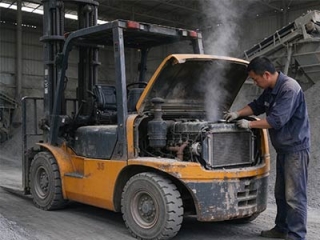 Heavy-Duty Diesel Forklift High Temperature Troubleshooting Guide3.5t diesel forklifts often overheat when handling sand and stone. Inspect cooling system step by step: radiator, belt, shroud, thermostat and water pump.
Do you like ?0
Read more








