Semi‑Electric Stacker | Buying Guide & Configuration Comparison
Warehouses with medium stacking frequency and limited equipment budget can consider cost‑effective semi‑electric stacker. However, units with similar appearance vary greatly in market price. Many buyers only compare quoted prices and end up with machines featuring exaggerated load rating, insufficient battery endurance and frequent breakdowns, wasting both time and investment. When purchasing semi‑electric stacker, buyers should compare full configurations instead of focusing merely on surface price to avoid low‑value traps.
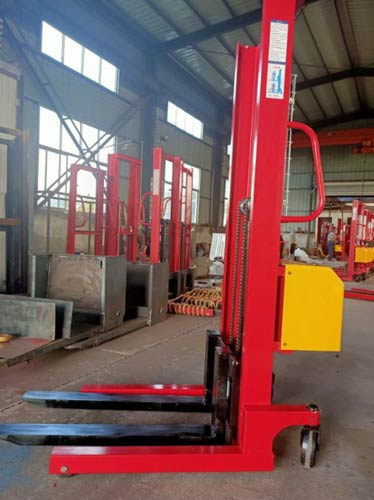
Load capacity and lifting height form the basic price range. It is not recommended to pick a model whose rated parameter just matches your regular cargo weight. Within the same product line, every 0.5‑ton increase in rated capacity will raise overall cost, and taller mast structure also pushes up quotation. Note load capacity attenuation at maximum lifting height. For instance, a 1.5‑ton unit will deliver lower safe working load at 3‑meter lift height. Long‑term full‑load operation may cause mast deformation and unintended fork descent. Reserve around 20% load margin for daily goods, and keep lifting height 15‑20 cm higher than actual rack level for safety clearance.
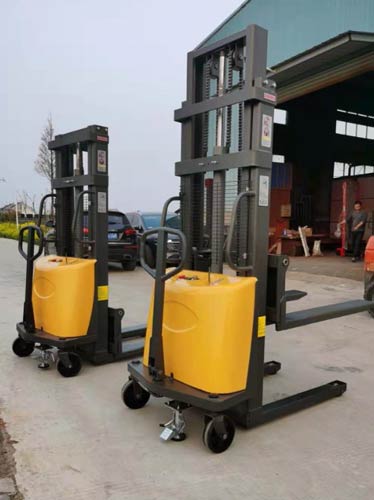
Battery is one of the highest‑cost components, accounting for over 20% of total machine cost. There is an obvious price gap between lead‑acid and lithium‑ion versions. Lead‑acid models come with lower upfront cost, suitable for single‑shift warehouses within 4‑hour daily operation, yet they require long charging hours and regular maintenance. Lithium‑ion options support opportunity charging with zero maintenance, ideal for high‑frequency two‑shift workflows. Even among lithium‑ion units, verify real battery capacity. Some low‑cost suppliers exaggerate Ah rating, which directly reduces available lifting cycles. Request official battery specifications during inquiry.
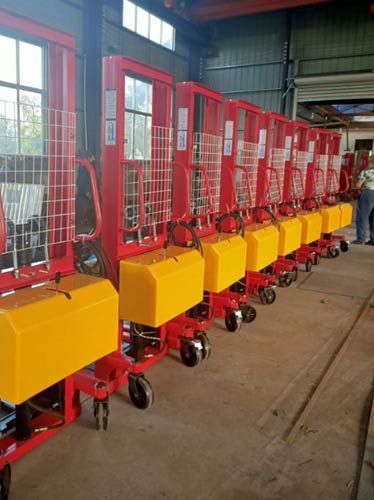
Core assemblies including mast and hydraulic cylinder determine long‑term durability. Budget‑oriented products adopt thin steel plates and rough welding seams, prone to shaking and deformation under sustained load. Reliable units apply thickened section steel and well‑sealed hydraulic cylinders to reduce oil leakage and pressure loss. Besides, straddle‑leg structures fit various pallet types, while leg‑free versions suit narrow aisles but demand flat floor condition. Different mechanical structures also bring different price levels.
In short, do not judge a semi‑electric stacker only by price tag. Evaluate load requirement, lifting height, battery type, frame structure and warranty terms comprehensively. You may choose newnewton or other reputable brands for reliable cost‑performance. Contact us for detailed customized proposals.
-
 Reliability Of Newnewton Warehouse Forklifts For Heavy-Duty ShiftsWarehouse forklift reliability relies on industrial parts, reinforced frames and factory durability tests. Proper operation and maintenance reduce unexpected downtime.
Do you like ?0
Read more -
 Forklift Configuration Strategy For Dense Warehousing, Warehouse ForkliftDense warehousing needs matched forklifts besides racks. Reach and trilateral stackers fit different layouts, coordinate aisle, load curve and floor for smooth handling.
Do you like ?0
Read more -
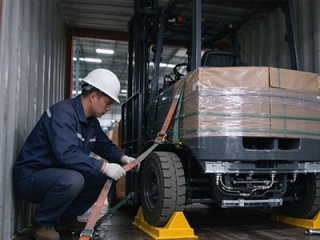 Full Container Supply For Export Forklifts, Forklift ManufacturerBulk forklift orders for overseas can ship by FCL or LCL. Newnewton FCL offers stable freight, safer packing and mixed models for large purchases.
Do you like ?0
Read more -
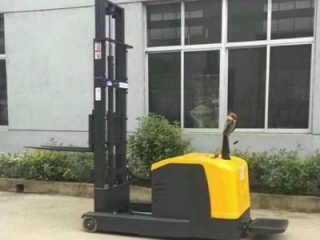 Stand-on Reach Stacker For Narrow Aisle Stacking, Mast Reach StructureStand-on reach stackers feature sliding masts that stay outside racks. They boost storage density in narrow aisles and require flat floors and standard pallets.
Do you like ?0
Read more -
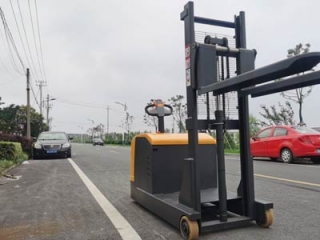 Stand-on Counterbalance Stacker For Various Pallets, Why No Leg RestrictionCounterbalance stackers have no front outriggers, using rear counterweight to avoid pallet interference. They fit various odd pallets yet need wider warehouse aisles.
Do you like ?0
Read more -
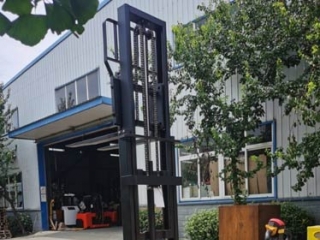 Custom Walk-Behind Counterbalance Stacker | Non-Standard ModificationsStandard walk-behind counterbalance stackers struggle with non-standard pallets and tight aisles. Customize load, lift, forks and structure, share working conditions for safe design.
Do you like ?0
Read more