
Ride-on Double Pallet Stacker | Key Advantages for Production Line & Warehousing
Supporting Assembly Line Transportation: What Are the Highlights of Ride-on Double Pallet Stacker? Fast cargo turnover is essential for manufacturing workshops, packaging workshops and logistics warehousing. Seamless material handling in every link greatly improves overall warehouse efficiency. If you pursue smoother transportation on assembly lines, the ride-on double pallet stacker is an ideal option.
According to the product document of Electric Double Lift Stacker released by China Industrial Vehicle Network: under the same pallet throughput, double pallet stackers reduce driving distance and start-stop frequency by around 48%, lifting single-machine operating efficiency by 38%-46%. Continuous production cannot be interrupted, which requires stable and uninterrupted transportation of raw materials and finished goods.
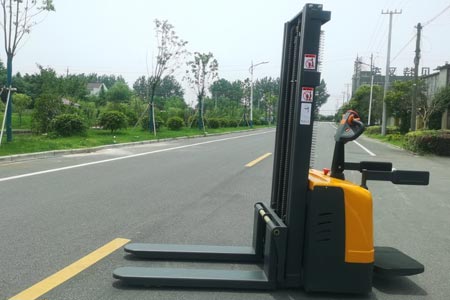
Conventional stackers can only carry one pallet per trip and need frequent back-and-forth travel. Equipped with double-layer forks, the ride-on double pallet stacker supports synchronous and independent lifting modes, transporting two standard pallets in one trip. It delivers prominent advantages for logistics warehousing, as detailed below.
Independent Double Fork Structure for Zoned High & Low Operation on Assembly Lines The two sets of forks are equipped with separate hydraulic systems, so goods do not need to be placed at the same height. It fits typical assembly line applications: transporting raw materials on lower forks and storing finished products on upper forks. It can also supply materials to two parallel production lines separately with great flexibility.
Lower Energy Consumption & Component Wear for Long-term Economical Operation Starting, stopping and turning cause the majority of energy loss and mechanical wear. Industrial vehicle condition tests prove that for the same transportation workload, double pallet stackers cut start-stop times by half, reduce power consumption by 22%, and slow down wear of wheels and hydraulic seals, extending maintenance intervals.
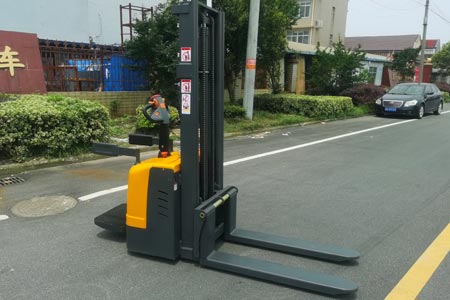
Excellent Aisle Adaptability, No Large-scale Plant Renovation Required The ride-on double pallet stacker requires a working aisle of 2.7–2.9 meters. Many warehouses beside production lines keep aisle width at 2.8 meters. No aisle widening or rack adjustment is needed after equipment delivery, saving high civil renovation costs.
Flexible for Multiple Parallel Production Lines to Expand Application Scenarios Separately controlled hydraulic forks support differentiated layered operations. The stacker can deliver materials to two adjacent assembly lines at the same time, or transport regular materials on lower forks while carrying standardized finished goods on upper forks. One machine covers raw material receiving, production feeding and finished goods storage. Enterprises can reduce the number of handling vehicles and cut procurement expenses.
The double pallet stacker brings remarkable strengths to logistics warehousing. It completes handling, stacking and loading tasks for assembly line transportation and carries two pallets per trip to accelerate warehouse turnover. Contact us to get detailed technical specifications for free.
-
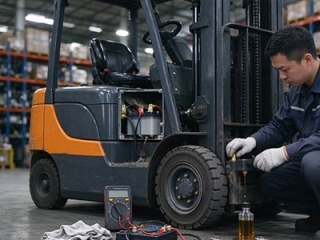 Reliability Of Newnewton Warehouse Forklifts For Heavy-Duty ShiftsWarehouse forklift reliability relies on industrial parts, reinforced frames and factory durability tests. Proper operation and maintenance reduce unexpected downtime.
Do you like ?0
Read more -
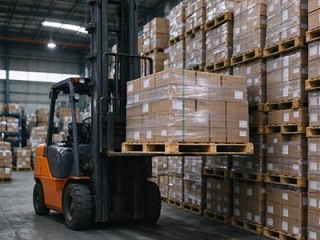 Forklift Configuration Strategy For Dense Warehousing, Warehouse ForkliftDense warehousing needs matched forklifts besides racks. Reach and trilateral stackers fit different layouts, coordinate aisle, load curve and floor for smooth handling.
Do you like ?0
Read more -
 Full Container Supply For Export Forklifts, Forklift ManufacturerBulk forklift orders for overseas can ship by FCL or LCL. Newnewton FCL offers stable freight, safer packing and mixed models for large purchases.
Do you like ?0
Read more -
 Stand-on Reach Stacker For Narrow Aisle Stacking, Mast Reach StructureStand-on reach stackers feature sliding masts that stay outside racks. They boost storage density in narrow aisles and require flat floors and standard pallets.
Do you like ?0
Read more -
 Stand-on Counterbalance Stacker For Various Pallets, Why No Leg RestrictionCounterbalance stackers have no front outriggers, using rear counterweight to avoid pallet interference. They fit various odd pallets yet need wider warehouse aisles.
Do you like ?0
Read more -
 Custom Walk-Behind Counterbalance Stacker | Non-Standard ModificationsStandard walk-behind counterbalance stackers struggle with non-standard pallets and tight aisles. Customize load, lift, forks and structure, share working conditions for safe design.
Do you like ?0
Read more








