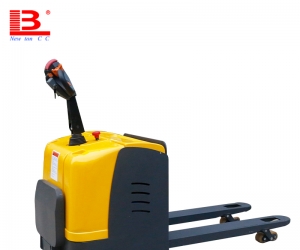
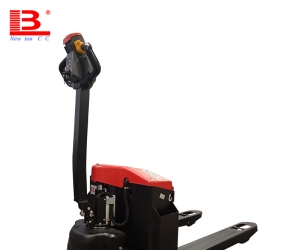
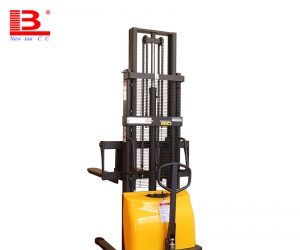
Stand-On Electric Stacker Introduction | Light-Duty Electric Stacker
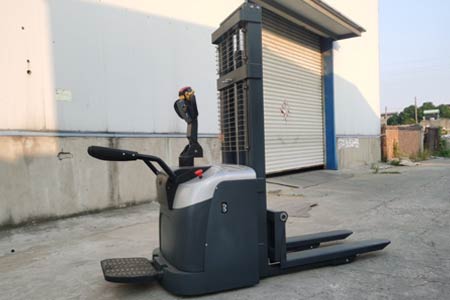
Stand-on electric stacker is an ideal handling equipment for small and medium warehouses with high-frequency small cargo turnover, production line material supply, medium-sized rack stacking and long-duration stacking operations. This introduction helps purchasers quickly judge whether the machine matches on-site conditions and save procurement time.
Core Advantages of Electric Stackers
Compact body, excellent aisle adaptability The machine features small overall dimensions and tight turning radius. No extra wide working aisle is required, perfectly matching narrow-aisle rack layout in small & medium warehouses and improving storage space utilization.
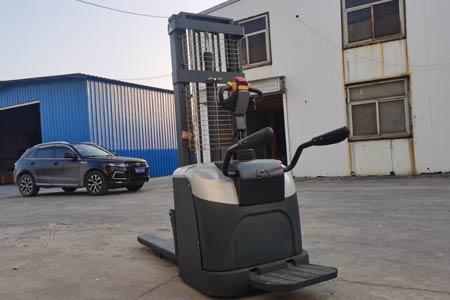
Fully electric drive, ideal for indoor operation Electric travel and electric lifting deliver low noise and zero exhaust emissions. Suitable for electronic workshops, food warehouses, packaging factories and other indoor working environments.
Easy operation & low maintenance threshold Intuitive control handles enable operators to get proficient after short training. Simplified structure contains fewer wearing parts, lowering daily maintenance difficulty and service costs.
High cost performance Compared with heavy reach trucks and counterbalance forklifts, light-duty electric stacker requires lower initial investment. It meets light-load, medium-height stacking demands and avoids budget waste caused by over-specified equipment.
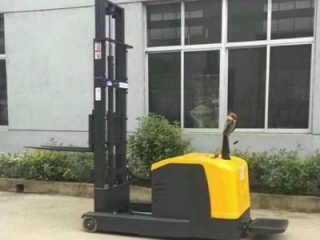
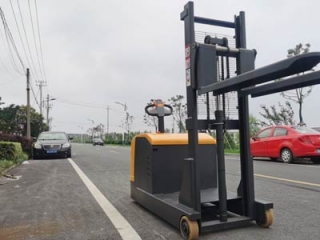
Beyond the universal strengths, stand-on electric stacker has unique merits. Equipped with a standing operator platform, the operator travels together with the truck. Physical fatigue is greatly reduced during long-distance transfer, making it ideal for warehouses with heavy cargo flow and long transport routes.
Suitable Application Scenarios
E-commerce warehouses and small cargo turnover hubs with high daily pallet access frequency;
Assembly line material feeding and finished goods stacking in production workshops;
Medium-level stacking (1.6–4.5m) on small and medium-sized racking systems;
Long-hour stacking work on flat indoor floors.
Not Recommended Scenarios
Extremely tight spaces with insufficient clearance for the standing operator platform;
Low operation frequency and ultra-short cargo transfer distance;
Outdoor uneven ground or continuous heavy-load lifting conditions.
light-duty electric stacker meets daily operation demands of small and medium warehouses, boosting handling efficiency within controllable budgets. Wondering if this stacker fits your warehouse? Contact us for detailed consultation.
-
 Reliability Of Newnewton Warehouse Forklifts For Heavy-Duty ShiftsWarehouse forklift reliability relies on industrial parts, reinforced frames and factory durability tests. Proper operation and maintenance reduce unexpected downtime.
Do you like ?0
Read more -
 Forklift Configuration Strategy For Dense Warehousing, Warehouse ForkliftDense warehousing needs matched forklifts besides racks. Reach and trilateral stackers fit different layouts, coordinate aisle, load curve and floor for smooth handling.
Do you like ?0
Read more -
 Full Container Supply For Export Forklifts, Forklift ManufacturerBulk forklift orders for overseas can ship by FCL or LCL. Newnewton FCL offers stable freight, safer packing and mixed models for large purchases.
Do you like ?0
Read more -
 Stand-on Reach Stacker For Narrow Aisle Stacking, Mast Reach StructureStand-on reach stackers feature sliding masts that stay outside racks. They boost storage density in narrow aisles and require flat floors and standard pallets.
Do you like ?0
Read more -
 Stand-on Counterbalance Stacker For Various Pallets, Why No Leg RestrictionCounterbalance stackers have no front outriggers, using rear counterweight to avoid pallet interference. They fit various odd pallets yet need wider warehouse aisles.
Do you like ?0
Read more -
 Custom Walk-Behind Counterbalance Stacker | Non-Standard ModificationsStandard walk-behind counterbalance stackers struggle with non-standard pallets and tight aisles. Customize load, lift, forks and structure, share working conditions for safe design.
Do you like ?0
Read more