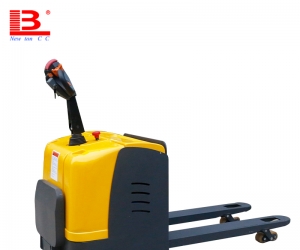
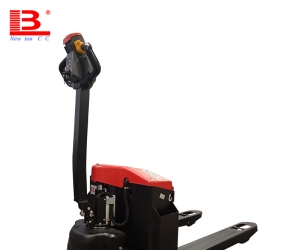
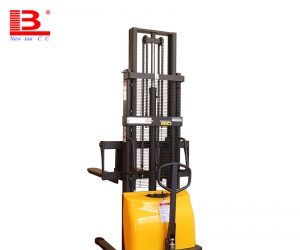
Many buyers wonder how much a walk-behind counterbalance stacker costs. If you plan to purchase a pedestrian counterbalance stacker in 2026, this guide covers major factors that cause price differences for better budget planning. Four core elements lead to obvious price gaps.
Lifting Height & Mast Specification Standard two-stage mast for 2–3m lifting comes with no extra charge. 3.5–4m three-stage free-lift mast increases costs by $175–$440. For ultra-high masts over 4 meters, reinforced steel plates, cylinders and chains push costs further up.
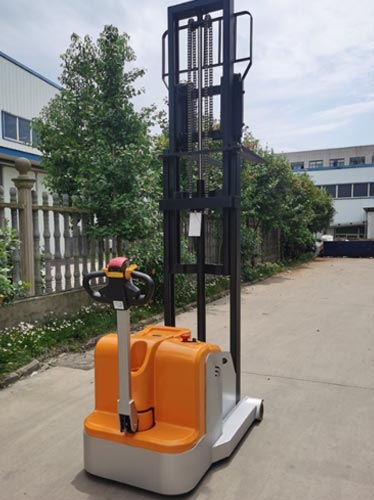
Battery Type (Biggest Price Variation) Lead-acid battery: Lower upfront cost, suitable for daily operation under 4 hours. Regular maintenance is required with limited cycle life. Lithium battery: Maintenance-free and supports quick charging. Service life is 2–3 times longer than lead-acid batteries, ideal for multi-shift warehouses. The premium ranges from $410–$820.
Electric Drive & Controller System Basic configuration includes brushed motor and domestic simple controller. AC brushless drive paired with imported CURTIS controller brings fewer failures and lower long-term maintenance costs, raising overall machine price.
Optional Attachments Side shifter, extended forks, wear-resistant solid tires, anti-collision devices and cold storage modification all incur extra charges.
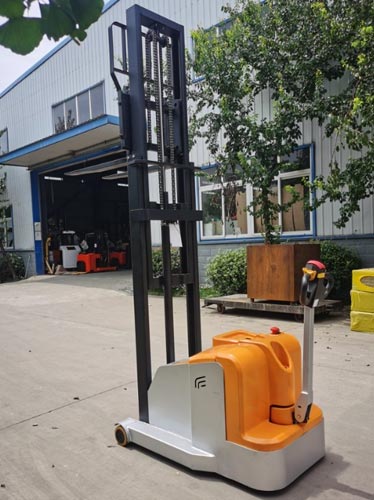
Before purchasing the walk-behind counterbalance stacker, evaluate the above points, together with brand premiums, transport and packaging fees to calculate the total investment. Reference bare machine price range (Factory reference price, excluding freight & export charges): 1 ton walk-behind counterbalance stacker: $1,180–$1,910 1.5 ton walk-behind counterbalance stacker: $1,620–$2,500 2 ton walk-behind counterbalance stacker: $2,210–$3,090
The standout feature of the pedestrian counterbalance stacker is no front support legs. It works with non-standard pallets and closed-bottom pallets that cannot be handled by straddle stackers, requiring minimum aisle width of 2.6m. Contact us anytime if you need an accurate quotation.
-
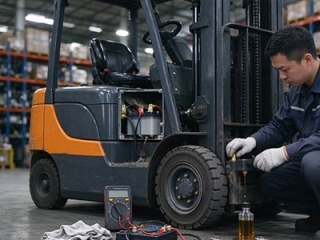 Reliability Of Newnewton Warehouse Forklifts For Heavy-Duty ShiftsWarehouse forklift reliability relies on industrial parts, reinforced frames and factory durability tests. Proper operation and maintenance reduce unexpected downtime.
Do you like ?0
Read more -
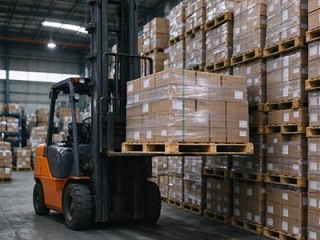 Forklift Configuration Strategy For Dense Warehousing, Warehouse ForkliftDense warehousing needs matched forklifts besides racks. Reach and trilateral stackers fit different layouts, coordinate aisle, load curve and floor for smooth handling.
Do you like ?0
Read more -
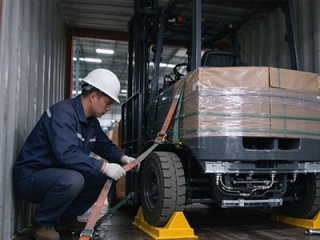 Full Container Supply For Export Forklifts, Forklift ManufacturerBulk forklift orders for overseas can ship by FCL or LCL. Newnewton FCL offers stable freight, safer packing and mixed models for large purchases.
Do you like ?0
Read more -
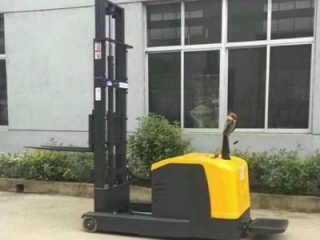 Stand-on Reach Stacker For Narrow Aisle Stacking, Mast Reach StructureStand-on reach stackers feature sliding masts that stay outside racks. They boost storage density in narrow aisles and require flat floors and standard pallets.
Do you like ?0
Read more -
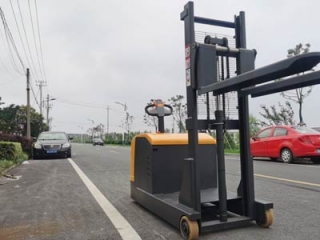 Stand-on Counterbalance Stacker For Various Pallets, Why No Leg RestrictionCounterbalance stackers have no front outriggers, using rear counterweight to avoid pallet interference. They fit various odd pallets yet need wider warehouse aisles.
Do you like ?0
Read more -
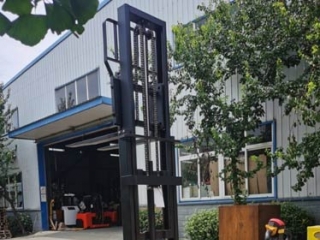 Custom Walk-Behind Counterbalance Stacker | Non-Standard ModificationsStandard walk-behind counterbalance stackers struggle with non-standard pallets and tight aisles. Customize load, lift, forks and structure, share working conditions for safe design.
Do you like ?0
Read more